Sleep & Circadian Health

Understand your sleep. Work with your body clock. Own all 24 hours for optimal health and wellness.

Sleep and circadian health shape how we rest, wake, think, feel, heal, and function.
Learn the science of sleep and body rhythms — and how to support your health across every stage of life.
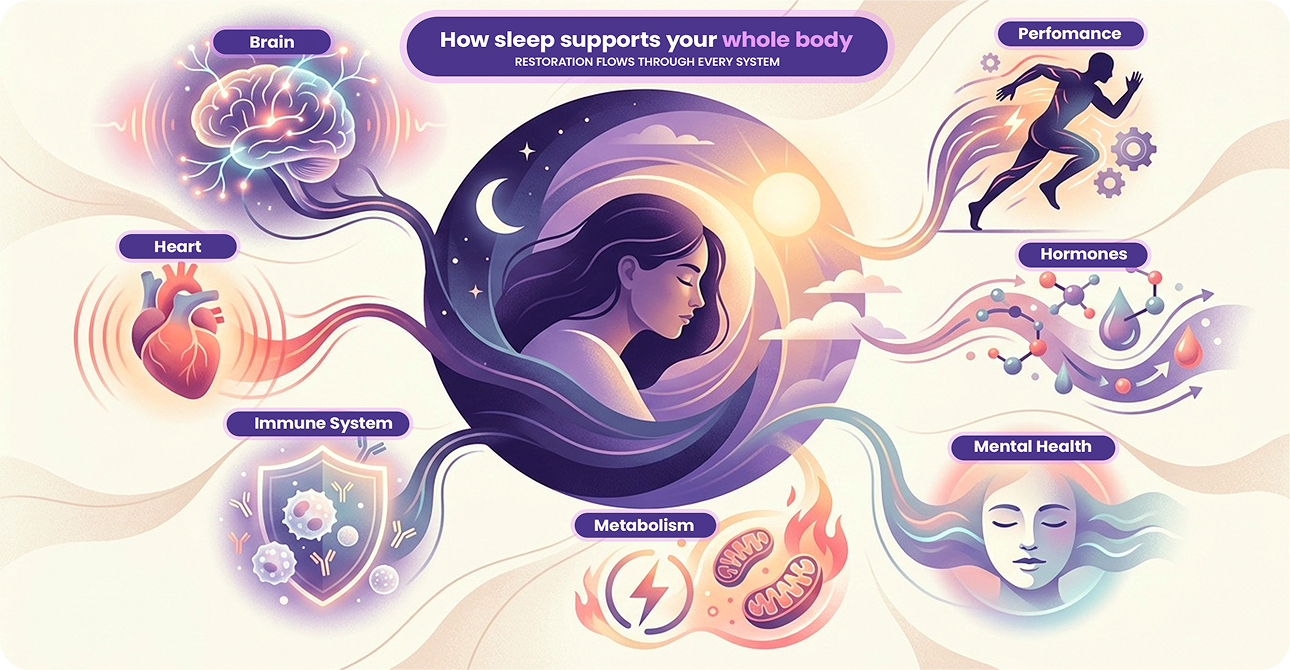
Sleep and Circadian health are whole body health

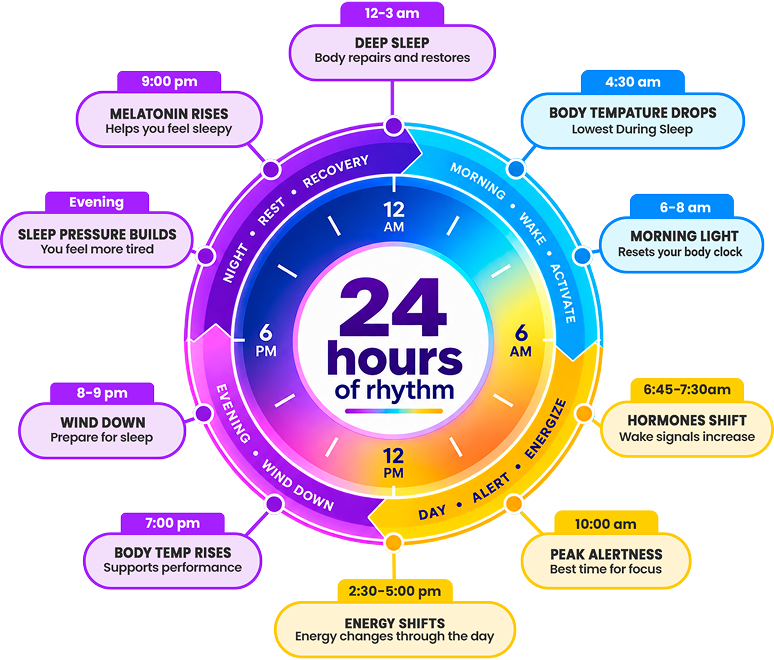
Sleep is an active part of a group of 24-hour biological processes, also known as the circadian rhythm. This rhythm, our daily choices and actions, and the quality of sleep we get each night shape our health.

Sleep Restores Us

Sleep is a dynamic state of brain and body activities that cycles through processes that support repair, memory, learning, immune function, and energy.

Circadian Coordinates Our Body Systems

The circadian rhythm, is a 24 hour cycle that help time sleep, alertness, hormones, temperature, metabolism and more – using light and other cues to align.

Own All 24 Hours

An integrated view of sleep and circadian rhythms across day and night, and how their alignment supports whole-body health, wellness and performance.
What would you like to understand?

click on a card to visit the overview page to learn more

Circadian Health

Understand your body’s 24-hour clock and why light, timing, routines, and rhythm matter.

Support Healthy Sleep

Learn practical, evidence-based ways to support sleep and circadian health across the day and night.

Helping Sleep Health

Know when sleep concerns may need tracking, support, or clinical evaluation.

The State of Sleep in the US

How Americans are sleeping, the impact of this, and how we can work toward better sleep equity.

Why sleep and circadian matter

Improving your sleep and embracing your circadian rhythm can be transformative. They touch every aspect of your life. Optimal sleep replenishes your body and mind, boosting energy, concentration, and creativity during the day. It strengthens your immune system, reduces the risk of chronic illnesses like heart disease and diabetes, and supports mental health by easing stress and anxiety.

A well-regulated circadian rhythm helps align your sleep-wake cycle with your daily activities, boosting productivity and mood while fostering a sense of balance. From physical health to emotional resilience and even your social life, better sleep empowers you to thrive in all areas of life. Embracing these benefits isn’t just a change –  it’s a commitment to living up to your full potential across all 24 hours.

Healthy sleep is more than numbers

Understanding your sleep and circadian rhythms can help you improve your overall health. Tracking offers useful insights, but true sleep health goes beyond the numbers. The dimensions of sleep create a fuller picture by including when and how consistently you sleep, how restorative it feels, and how well you function throughout the day.

Dimensions of sleep

Timing

Sleep happens at a time that fits the body clock and daily life

Duration

Total sleep over a 24 hour period is enough for that stage of life

Regularity

Sleep and wake times are reasonably consistent

Efficiency

Most time in bed is spent sleeping, with manageable awakenings

Alertness

The person can function, learn, play, work, or take part in the day

Satisfaction

Sleep is restorative and supportive of healthy behaviors and activity
Adapted from Buysse DJ. Sleep health: can we define it? Does it matter? Sleep. 2014 Jan 1;37(1):9-17. DOI: 10.5665/sleep.3298
Explore the 6 dimensions of sleep

Discover Sleep & Circadian By Topic

The Role of Light Exposure

Learn how morning light, daytime brightness, evening darkness, and blue light affect your body clock alignment

Melatonin Explained

Learn about the role of melatonin in circadian rhythm and what supplements can and can’t do for sleep

Chronotypes

Learn why some people are early risers, and others are night owls, and understand your own pattern

Caffeine, Alcohol and Drugs

Learn how various substances can affect sleep quality, timing, and next-day alertness

Napping

Learn when naps can support wellbeing, when they can impact sleep, and when they are a sign something is off

Stress And Sleep

Learn how stress, worry and life demands can interfere with sleep, and how to take care of yourself

Wearable Sleep Technology

Learn how to use sleep trackers and wearables wisely whilst understanding their limits

State of Sleep in America

Explore national trends in sleep health, sleep disorders, public attitudes, access to care and the impacts on public health in the US

When Sleep Needs Help

Learn when ongoing sleepiness, insomnia, breathing problems, or other sleep disruptions may be a sign of a sleep problem

Related Pages

Across The Body

Sleep & circadian influence every system in the body, and vice versa

Sleep Problems & Disorders

Recognize the signs and discover how to get help for sleep problems

Programs

WSCN offers several support programs to help people access care

Latest News & Stories

Get up to date with the latest news, patient stories, and more