
Sleep & Circadian Health
Benefits of healthy sleep
Sleep supports health across the brain, body, and daily life. Working alongside the patterns of the circadian rhythm, sleep helps with learning and memory, mental and emotional regulation, appropriate immune responses, healthy metabolism and hormones, and cardiovascular wellbeing. Sleep also supports productivity, physical performance, relationships, sexual health, and the ability to make thoughtful, safe decisions.
This page explores in more detail how you can understand the role and value of your sleep health and circadian rhythms, and gives you the opportunity to use them as a tool for your overall health, wellness, and performance, so you can own all 24 hours.
Overview
- Why sleep and circadian matter
- Brain health and development
- Learning, study and mental performance
- Reduce errors and risk-taking
- Improve mental health
- Improve immunity
- Enhance athletic performance
- Increased zest for life and productivity
- Relationships and sexual health
- Support metabolism
- Sleep and disease prevention
Why sleep and circadian health matter
Sleep and circadian health are foundations of well-being, alongside nutrition and physical activity. Together, they support how people feel and function each day and contribute to long-term physical, mental, and emotional health.
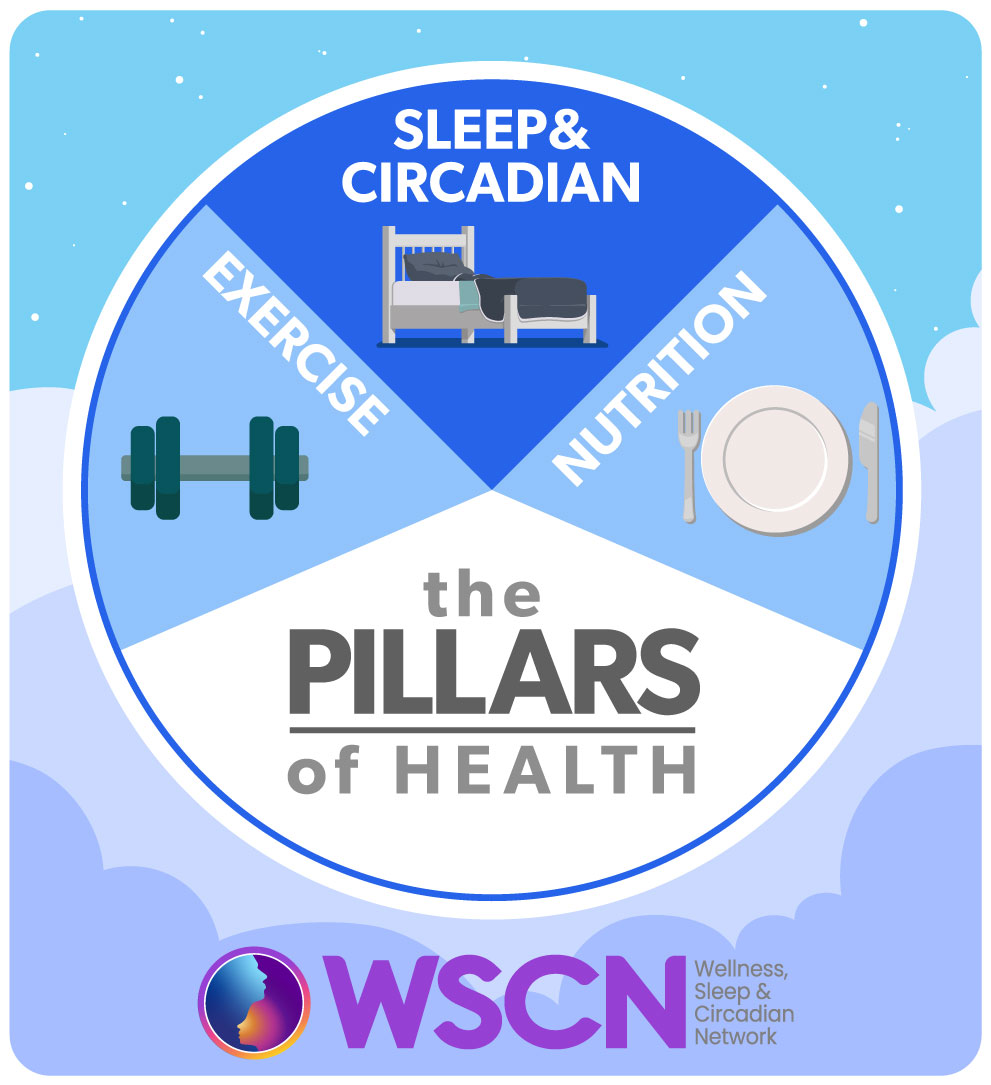
Sleep gives the brain and body regular time to regulate, restore, process information, and prepare for the next waking period. As the brain moves through repeating sleep stages, it supports learning, memory, emotional processing, physical recovery, and physiological balance. The body also coordinates immune, metabolic, hormonal, and cardiovascular processes across the sleep–wake cycle.
Circadian rhythms help organize these processes across approximately 24 hours. This internal timing system influences sleep and alertness, hormone release, body temperature, digestion, metabolism, and performance. Supporting alignment between sleep, light exposure, activity, meals, and the body clock can help people feel more alert when awake, sleep more restoratively, and use their energy effectively throughout the day.
The goal is not perfect sleep or a rigid schedule. Sleep and daily rhythms naturally vary. A more useful goal is a sustainable pattern that provides adequate opportunity for sleep, is reasonably regular and aligned with the body clock, feels restorative, and supports health, wellness, and performance across all 24 hours.
Brain health and development
Healthy sleep is essential for a healthy brain. During sleep the brain moves through various stages that repeat over several cycles. Each stage appears to support different brain functions. Deep non-REM sleep is linked with some forms of memory consolidation and restoration. REM sleep is linked with emotional processing, learning, memory, and brain development. All stages matter, and healthy sleep gives the brain repeated opportunities to move through them as needed.
In infants, children and teens sleep is critical for brain growth and development. And what is interesting, is that this does not stop once we reach adulthood. In a large study of middle-aged and older adults, approximately seven hours of sleep was associated with the strongest cognitive performance. Adults sleeping between six and eight hours also showed larger gray-matter (important brain cell types) in several brain regions compared to those reporting shorter or longer sleep times.
Another essential process for brain health is glymphatic drainage. The glymphatic system is a network of fluid pathways that helps move cerebrospinal fluid through the brain and carry away metabolic waste. This process appears to become more active during sleep, particularly deep non-REM sleep, supporting the brain’s natural maintenance and immune functions. Although research is still evolving, this overnight “brain cleaning” process appears to be important for protecting brain health throughout life.
Learning, study and mental performance
Sleep is part of learning. While a person sleeps, the brain helps stabilize and integrate information encountered during the day. Sleep after learning can strengthen memory, support pattern recognition, and improve the ability to retrieve information later.
This is why staying awake all night to study or meet a work deadline can be counterproductive. Extra time spent awake may create more “time on task”, but missing out on sleep can offset that gain. Sleep, especially rapid eye movement and deep sleep, is necessary for the brain to consolidate learning and experiences, reinforcing correct patterns and helping the brain to identify and correct mistakes. This is why an all-nighter is not the way to prepare for a big exam or presentation; deep sleep is needed to be able to store the studied information and retrieve it when taking the test.
Sleep also helps people learn from experience. By supporting working memory, cognitive flexibility, and error monitoring, adequate sleep makes it easier to compare options, update a plan, and avoid repeating mistakes.
Reduce errors, risk-taking behavior and poor judgement
Healthy sleep and circadian rhythms help to restore cognitive function, which helps people to think more clearly. Sleep loss is particularly detrimental to the part of the brain known as the prefrontal cortex. This brain region is essential for decision making, attention, and impulse control. Furthermore, adequate sleep improves logic, working memory, and attention. Working memory involves the ability to hold and process information, which in turn reduces simple mistakes and helps people pay attention to detail.
Sleep deprivation affects the dopamine pathways, a region of the brain involved in the reward system. When people are sleep deprived, they are more likely to seek immediate gratification, to take risks, and to underestimate the negative consequences of their behavior. Studies show that tired individuals are more likely to gamble, speed, or make impulsive financial and social decisions.
The part of the brain called the amygdala processes emotions such as fear and anger. When people are sleep-deprived, their amygdalas become overactive, and, as mentioned previously, the control of the amygdala by the prefrontal cortex is weakened, leading people to become too emotionally reactive, have poor judgment, and make irrational decisions. Healthy sleep results in people being able to make calm, rational decisions.
Driving sleepy is comparable to drink-driving

Research shows that sleep deprivation has similar effects on brain function as alcohol, slowing reaction times and motor performance. It has been shown that staying awake for 17 hours causes the same impairments as a blood alcohol concentration (BAC) of 0.05%. Moreover, staying awake for a 24-hour period causes brain impairments equal to or worse than having a BAC of 0.1%.
Unfortunately, people who are sleep-deprived may not be aware of the impact of their sleepiness on their decision-making capabilities.
Improve mental health and emotional wellbeing
Sleep is part of emotional wellbeing. A restorative night gives the brain time to process experiences, regulate emotional responses, and prepare for the demands of the next day. Healthy sleep can support a steadier mood, flexible thinking, and the ability to respond to everyday stress without becoming overwhelmed.
Sleep also supports the emotional skills that help people connect with others and cope with change. When sleep is regular and sufficient, people may find it easier to notice how they feel, pause before reacting, consider another perspective, and recover after a difficult experience. Sleep quality and continuity matter alongside duration; the goal is not perfect sleep, but a pattern that helps a person feel restored and able to function.
Research supports both the emotional benefits of sleep and the value of improving sleep. Reviews of experimental studies find that sleep loss can reduce positive emotion and increase emotional reactivity, anxiety, and difficulty regulating feelings. A review of over 60 studies showed that interventions that improved sleep also improved mental health, including reductions in depression, anxiety, and stress symptoms. It is important to note that supporting sleep is one part of caring for mental health, not a replacement for professional support when that is needed.
Improve immunity and reduce inflammation
Sleep helps regulate immune activity and the body’s response to infection and inflammation. During sleep, the body carries out processes involved in repair, recovery, and resilience.
Research reviews have linked sleep disturbance and very short sleep with higher levels of inflammatory markers such as C-reactive protein and interleukin-6. This is important because whilst inflammation is a normal and necessary part of immune defense, persistently elevated inflammation levels may contribute to a higher risk of chronic conditions, such as cardiovascular disease and type 2 diabetes.
Getting sufficient good quality sleep ensures that the immune system works to maintain overall health, and it is one of the most important things you can do for disease prevention, alongside exercise and nutrition.
Enhance physical and athletic endurance, strength, reaction time and accuracy

Healthy sleep supports reaction time, coordination, accuracy, endurance, strength, mood, and recovery. Research shows that acute sleep loss generally negatively affects next-day exercise performance.
A research project with collegiate basketball players found that extending sleep was associated with faster sprint times, better shooting accuracy, quicker reaction time, improved mood, and reduced fatigue. This was a small study in a specific athletic population, so the exact results should not be generalized to everyone. Still, it illustrates a broader point: sleep is an essential part of training, recovery and performance support.
Athletes and active people may face additional barriers to getting enough sleep, including early training, travel, competition stress, pain, and late events. Supporting sleep involves planning around these demands, protecting recovery time, and considering circadian timing. There is increasing evidence that maintaining good quality sleep and stable circadian alignment can be used as an all-natural and highly effective performance enhancement technique, alongside injury prevention strategy and recovery approach.
Wake up ready to seize the day
Quality sleep can help you wake feeling restored, with the energy and focus to make the most of your day. Making time for sleep is an investment in your wellbeing, attention, and ability to complete tasks. Adults who sleep 7–9 hours a night tend to be more productive than adults who sleep less. One analysis found that workers who slept 7–9 hours had a productivity rate 1.5 percentage points higher than workers who slept 6–7 hours. It also estimated that shorter sleep was linked with about 3.7 lost workdays each year for people sleeping 6–7 hours and about 6 lost workdays for those sleeping fewer than 6 hours, due to absenteeism or reduced productivity.
Interestingly, children experience the effects of short sleep differently to adults. Rather than being groggy or sluggish, children often become hyperactive and unfocussed, which can impact participation and learning in school. Good quality consistent sleep of sufficient duration is essential for children to live their best lives.
It is important to note here that duration of sleep is only one measure of healthy sleep – there are other important dimensions of sleep such as regularity, efficiency and how alertness and energy feel throughout the day.
Nurture relationships, connection and sexual health
Sleep can shape the way people communicate, interpret social cues, regulate conflict, and respond to the needs of others. When sleep is restricted, irritability and emotional reactivity may increase while patience and perspective-taking become harder. Conversely, well rested people are able to communicate, self-regulate and show up in positive ways for family, friends and intimate partners.
Engaging in intimacy, including sexual activity, can have a positive impact on sleep. Sleeping in the same bed with a partner can lead to a deeper physical and emotional connection, resulting in reduced stress, improved relaxation, and better sleep quality. Sexual activity can lead to the release of hormones such as oxytocin and prolactin, which have sleep-promoting effects.
On the other hand, poor sleep, such as insomnia, sleep deprivation, and sleep apnea can cause sexual dysfunction. When people are sleep deprived, instead of producing sex hormones like estrogen and testosterone, their brains may release more cortisol, which may result in lower interest in sex, infertility, and sexual organ dysfunction for men and women. Finally, sleep deprivation may simply make people too tired to be interested in intimacy. So, the bottom line is that good-quality sleep can help to optimize relationships.
Sleeping with a partner can be supportive, neutral, or disruptive depending on each person’s needs, schedules, movement, snoring, breathing, temperature preferences, and sense of safety. If sexual health is a concern, speaking honestly with a qualified health professional can be helpful.
Support balanced metabolism
Sleep and circadian rhythms help regulate appetite, glucose metabolism, insulin sensitivity, energy use, and hormone timing. Sleep loss or circadian disruption can affect hunger, food choices, blood sugar regulation, and metabolic health.
Being awake and eating during the biological night can place food intake out of sync with rhythms in glucose regulation and energy metabolism. Laboratory and observational research suggests that short sleep and circadian misalignment (altered day-night rhythms) can promote increased calorie intake, altered energy expenditure, and impaired glucose metabolism (blood sugar control).
Whilst these relationships are complex and can be influenced by many things such as genetics, lifestyle, work schedules, and more, it’s helpful to be aware that late nights, skipping sleep, and eating outside of your normal rhythms can all impact your ability to process what you eat and maintain a healthy body weight, alongside your body’s capacity to maintain healthy blood sugar levels. The key is understanding that sleep and circadian health should be viewed as an important piece of the larger picture that you can influence for better health.
Prevent illness and improve chronic disease management
Sleep is connected with cardiovascular health. Sleep and circadian rhythms interact with blood pressure, inflammation, metabolism, heart rhythm, and vascular function. In 2022, the American Heart Association added sleep duration to its Life’s Essential 8 framework for cardiovascular health.
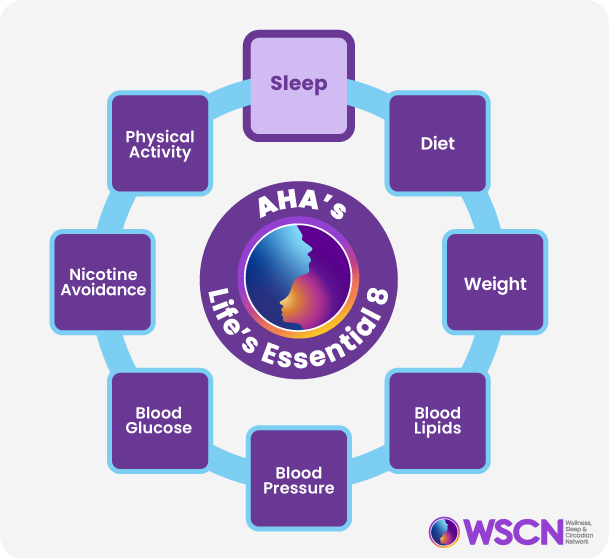
More recent guidance emphasizes that cardiometabolic health is related to multiple sleep dimensions, including duration, timing, regularity, continuity, satisfaction, and daytime function. Across populations, healthier sleep patterns are associated with lower risk of cardiovascular and metabolic conditions, but individual risk depends on many interacting factors.
Sleep disorders such as obstructive sleep apnea can place added stress on the cardiovascular system, including the heart and blood vessels. When obstructive sleep apnea occurs alongside insomnia symptoms and objectively short sleep, cardiometabolic risk may be even greater. What is important to understand is that sleep and circadian disorders increase risk, but do not cause cardiovascular or metabolic problems directly. It is often a combination of many interacting factors such as lifestyle, diet, exercise, sleep, and genetics that determine if an individual develops a disease.
What the research shows us is that protecting sleep and circadian health seriously is one of the best things people can do to prevent issues developing in the first instance – by keeping our overall health in balance from the foundations.
Dimensions of healthy sleep
Many people think that healthy sleep is simply getting enough hours of rest. But measuring sleep quality is more complex, and considers several important factors. A researcher by the name of Buysse defined six dimensions of sleep. His work has become a commonly used framework for measuring sleep health, and it is an effective tool for helping people understand how to optimize sleep and overall health – by thinking about both daytime and nighttime factors – within a 24 hour rhythm.
Using this framework, we start to think about sleep health as whole-person health. Two of the dimensions ask us to think about daytime alertness, mental focus and energy, alongside the sense of satisfaction upon waking up. Considering how our days and nights are interlinked gives us a starting point for making choices that help us optimize our wellbeing.
- Buysse, D. J. (2014). Sleep health: Can we define it? Does it matter? Sleep, 37(1), 9–17.
- Centers for Disease Control and Prevention. (2020, March 31). Risks from not getting enough sleep: Impaired performance. National Institute for Occupational Safety and Health.
- Craven, J., McCartney, D., Desbrow, B., Sabapathy, S., Bellinger, P., Roberts, L., & Irwin, C. (2022). Effects of acute sleep loss on physical performance: A systematic and meta-analytical review. Sports Medicine, 52(11), 2669–2690.
- Hafner, M., Stepanek, M., Taylor, J., Troxel, W. M., & van Stolk, C. (2017). Why sleep matters—The economic costs of insufficient sleep: A cross-country comparative analysis. RAND Health Quarterly, 6(4), Article 11.
- Hassinger, A. B., Velez, C., Wang, J., Mador, M. J., Wilding, G. E., & Mishra, A. (2024). Association between sleep health and rates of self-reported medical errors in intern physicians: An ancillary analysis of the Intern Health Study. Journal of Clinical Sleep Medicine, 20(2), 221–227.
- Hertenstein, E., Benz, F., Schneider, C. L., & Baglioni, C. (2023). Insomnia—A risk factor for mental disorders. Journal of Sleep Research, 32(6), e13930.
- Ioachimescu, O. C. (2022). From Seven Sweethearts to Life Begins at Eight Thirty: A journey from Life’s Simple 7 to Life’s Essential 8 and beyond. Journal of the American Heart Association, 11(21), e027658.
- Irwin, M. R., Olmstead, R., & Carroll, J. E. (2016). Sleep disturbance, sleep duration, and inflammation: A systematic review and meta-analysis of cohort studies and experimental sleep deprivation. Biological Psychiatry, 80(1), 40–52.
- Libman, E., Fichten, C., Creti, L., Conrod, K., Tran, D.-L., Grad, R., Jorgensen, M., Amsel, R., Rizzo, D., & Bailes, S. (2016). Refreshing sleep and sleep continuity determine perceived sleep quality. Sleep Disorders, 2016, Article 7170610.
- Mah, C. D., Mah, K. E., Kezirian, E. J., & Dement, W. C. (2011). The effects of sleep extension on the athletic performance of collegiate basketball players. Sleep, 34(7), 943–950.
- McHill, A. W., & Wright, K. P., Jr. (2017). Role of sleep and circadian disruption on energy expenditure and in metabolic predisposition to human obesity and metabolic disease. Obesity Reviews, 18(S1), 15–24.
- Meyer, N., Lok, R., Schmidt, C., Kyle, S. D., McClung, C. A., Cajochen, C., Scheer, F. A. J. L., Jones, M. W., & Chellappa, S. L. (2024). The sleep–circadian interface: A window into mental disorders. Proceedings of the National Academy of Sciences, 121(9), e2214756121.
- Nieuwenhuys, A., Wadsley, C. G., Sullivan, R., Cirillo, J., & Byblow, W. D. (2025). Tired and out of control? Effects of total and partial sleep deprivation on response inhibition under threat and no-threat conditions. Sleep, 48(3), zsae275.
- Palagini, L., Miniati, M., Marazziti, D., Franceschini, C., et al. (2022). Insomnia symptoms are associated with impaired resilience in bipolar disorder: Potential links with early life stressors may affect mood features and suicidal risk. Journal of Affective Disorders, 299, 596–603.
- Pejovic, S., Vgontzas, A. N., Fernandez-Mendoza, J., Fan, H., Lin, Y., Karataraki, M., & Bixler, E. O. (2024). Obstructive sleep apnea comorbid with insomnia symptoms and objective short sleep duration is associated with clinical and preclinical cardiometabolic risk factors: Clinical implications. Sleep Medicine, 124, 115–119.
- Pigeon, W. R., Youngren, W., Carr, M., Bishop, T. M., & Seehuus, M. (2023). Relationship of insomnia to sexual function and sexual satisfaction: Findings from the Sleep and Sex Survey II. Journal of Psychosomatic Research, 175, 111534.
- Rasmussen, M. K., Mestre, H., & Nedergaard, M. (2018). The glymphatic pathway in neurological disorders. The Lancet Neurology, 17(11), 1016–1024.
- Rijo-Ferreira, F., & Takahashi, J. S. (2019). Genomics of circadian rhythms in health and disease. Genome Medicine, 11(1), Article 82.
- Spinweber, C. L. (2025). Sleep and performance. Sleep Advances, 6(2), zpaf015.
- St-Onge, M.-P., Aggarwal, B., Fernandez-Mendoza, J., Johnson, D., Kline, C. E., Knutson, K. L., Redeker, N., & Grandner, M. A. (2025). Multidimensional sleep health: Definitions and implications for cardiometabolic health: A scientific statement from the American Heart Association. Circulation: Cardiovascular Quality and Outcomes, 18(5), e000139.
- Tai, X. Y., Chen, C., Manohar, S., & Husain, M. (2022). Impact of sleep duration on executive function and brain structure. Communications Biology, 5(1), Article 201.
- Watson, N. F., Badr, M. S., Belenky, G., et al (2015). Recommended amount of sleep for a healthy adult: A joint consensus recommendation of the American Academy of Sleep Medicine and Sleep Research Society. Journal of Clinical Sleep Medicine, 11(6), 591–592.
- Williamson, A. M., & Feyer, A.-M. (2000). Moderate sleep deprivation produces impairments in cognitive and motor performance equivalent to legally prescribed levels of alcohol intoxication. Occupational and Environmental Medicine, 57(10), 649–655.
This article is for educational purposes only and is not intended to replace professional medical advice, diagnosis, or treatment. Speak with a qualified healthcare professional about questions or concerns related to your sleep. Read full medical disclaimer
