
Sleep & Circadian Health

Sleep across the life stages

Sleep changes across life. Its importance does not.

Sleep supports growth, learning, mood, memory, immune function, metabolism, heart health, safety, and daily functioning. What changes is how much sleep people usually need, when the body is ready to sleep, and what can get in the way of healthy sleep and circadian rhythms.

Overview

  • Sleep is an essential pillar of health across all 24 hours
  • Sleep requirements vary across the life stages, from infancy to older adulthood
  • Each life stage has unique sleep and wake patterns, and sleep challenges
  • The body clock rhythm changes as we grow and age
  • Healthy sleep is more than hours slept: timing, regularity, continuity, daytime alertness, and restorative quality of sleep also matters

Sleep changes across life

Sleep is shaped by biology, daily schedules, light, health, and the conditions in which people live. Across the lifespan, several things tend to shift:

  • How much sleep is needed: Newborns often sleep more than half the day. Children and teens still need more sleep than adults. Most adults need at least 7 hours. Older adults usually need a similar amount, even if sleep feels lighter or more broken.
  • How sleep is organized: Infants sleep in short stretches across day and night. Sleep gradually consolidates into a longer night, with naps dropping away in childhood. Adults usually have one main sleep period. Older adults may wake more often or nap during the day.
  • When the body is ready to sleep: The circadian system, the body’s internal 24-hour clock, is immature at birth, becomes more stable in childhood, often delays in adolescence, and may shift earlier or weaken with older age.
  • What challenges sleep: Feeding and development shape infant sleep. Routines, school, and bedtime resistance are common in childhood. Teens face later body clocks, early school start times, screens, and social demands. Adults juggle work, caregiving, stress, and health changes. Older adults may be affected by medications, medical conditions, retirement lifestyle changes, and earlier waking/bedtimes.

Learning what is healthy for your life stage can help you make decisions to support your sleep and take ownership of all 24 hours.

What healthy sleep means at every age

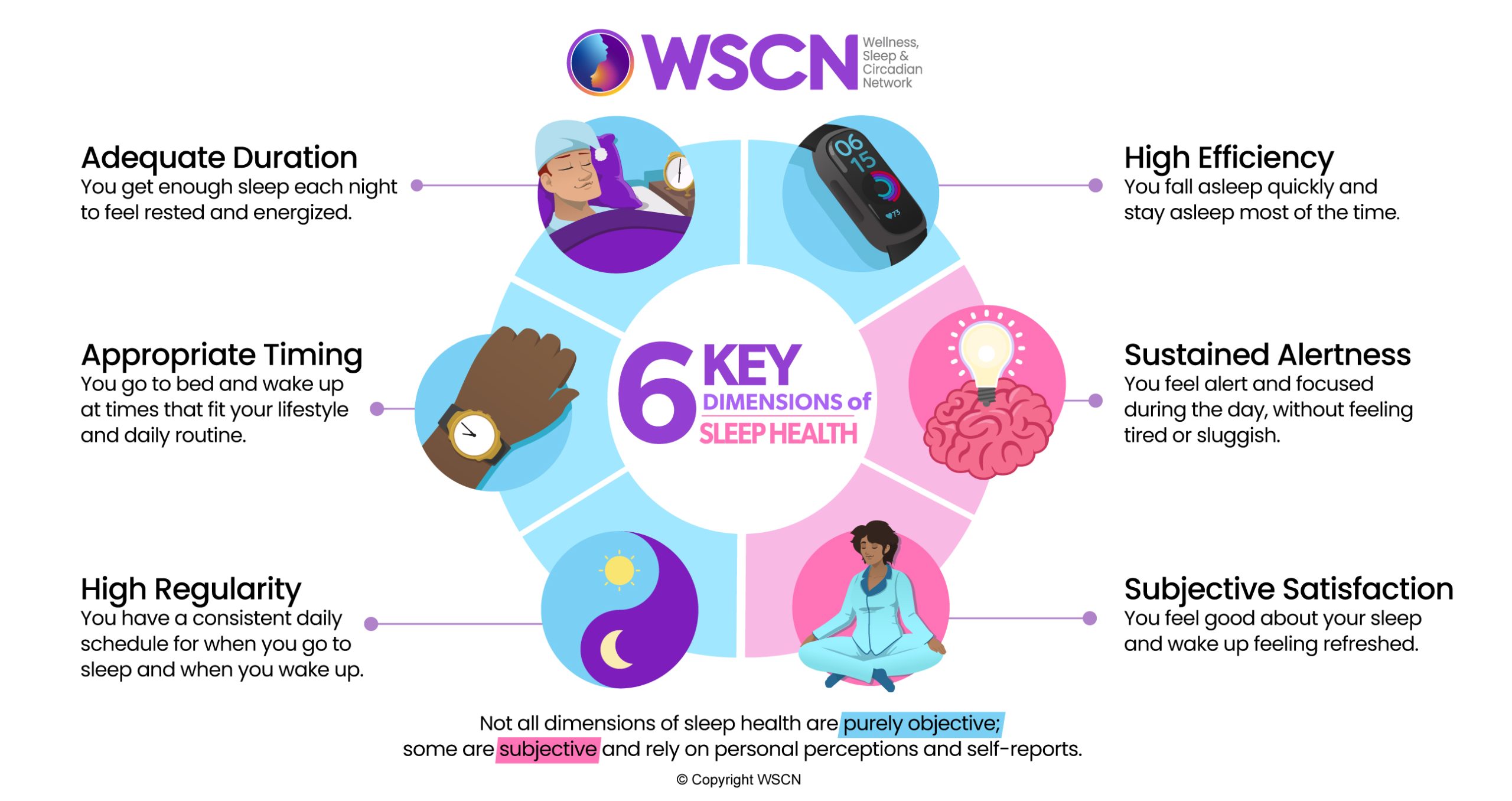
Healthy sleep is more than just a number. In fact, it has several important dimensions, and understanding each one can help you take better care of both your sleep and your body’s natural rhythms. As you can see in the image below, the dimensions of healthy sleep include: duration, timing, regularity, efficiency, daytime alertness and satisfaction.
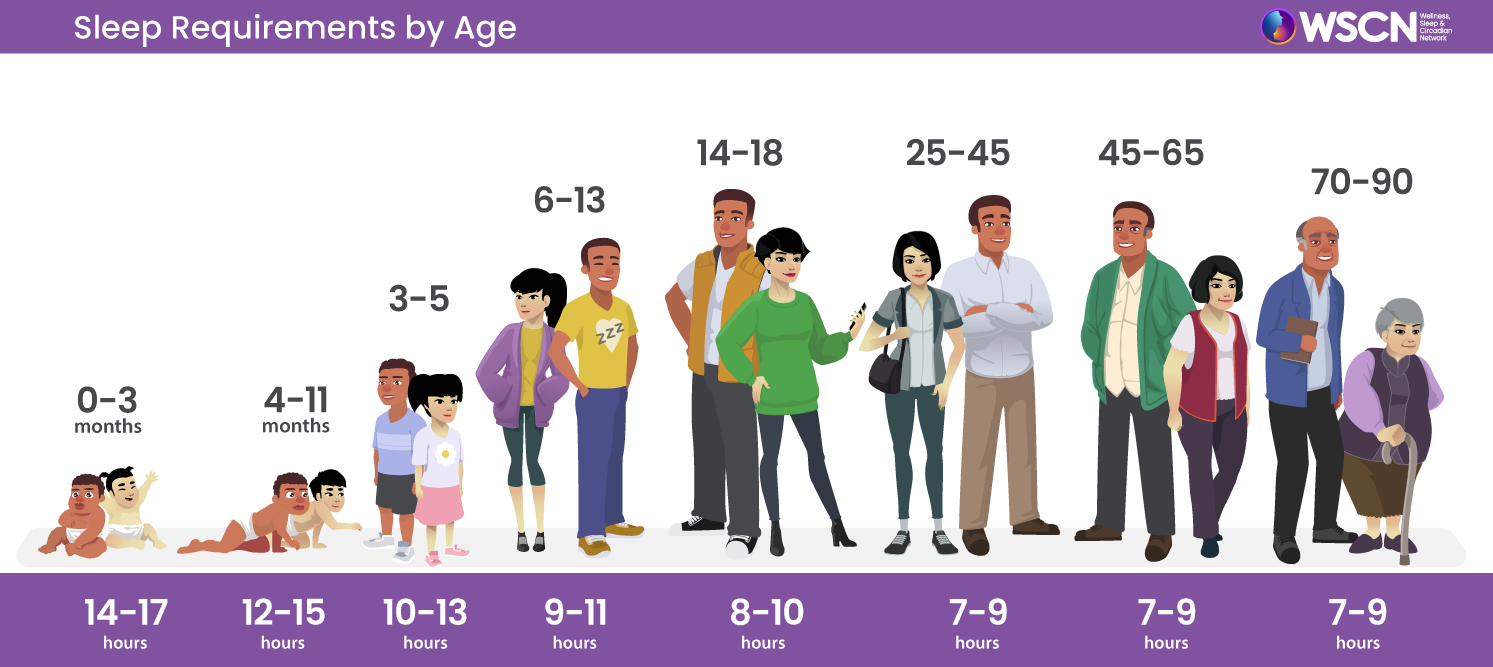
Typical sleep needs by life stage

You will see that sleep duration requirements vary significantly in early life, and stabilise into adulthood. As newborns, humans sleep a lot over 24 hours, and this gradually moves towards a more stable 7-9 hours by adulthood.
References
  1. Buysse, D. J. (2014). Sleep health: Can we define it? Does it matter? Sleep, 37(1), 9–17. https://doi.org/10.5665/sleep.3298
  2. Hirshkowitz, M., et al (2015). National Sleep Foundation’s sleep time duration recommendations: Methodology and results summary. Sleep Health, 1(1), 40–43. https://doi.org/10.1016/j.sleh.2014.12.010
  3. Hood, S., & Amir, S. (2017). The aging clock: Circadian rhythms and later life. Journal of Clinical Investigation, 127(2), 437–446. https://doi.org/10.1172/JCI90328
  4. Paruthi, S.,  et al (2016). Consensus statement of the American Academy of Sleep Medicine on the recommended amount of sleep for healthy children: Methodology and discussion. Journal of Clinical Sleep Medicine, 12(11), 1549–1561. https://doi.org/10.5664/jcsm.6288
  5. Watson, N. F.,  et al (2015). Recommended amount of sleep for a healthy adult: A joint consensus statement of the American Academy of Sleep Medicine and Sleep Research Society. Sleep, 38(6), 843–844. https://doi.org/10.5665/sleep.4716

Medical disclaimer
This article is for educational purposes only and is not intended to replace professional medical advice, diagnosis, or treatment. Speak with a qualified healthcare professional about questions or concerns related to your sleep. Read full medical disclaimer