
Sleep & Circadian Health

Sleep Equity and State of Sleep

Sleep is an essential pillar of health, but many people in the United States and around the world are not getting the sleep they need. Understanding the state of sleep helps show us how sleep and circadian health affect and are connected to daily life, learning, work, safety, mood, and family wellbeing, as well as long-term health and quality of life.

Looking at the state of sleep in the US and around the globe helps explain why sleep should be understood as a public health matter, not just a personal health concern. It also brings up the topic of sleep equity: the idea that everyone should have a fair opportunity to get healthy sleep and circadian support. This is important because we know that right now not everyone has the same access to sleep.

Fully understanding the state of sleep can help communities, healthcare systems, schools, workplaces, and public health leaders make better decisions. When sleep is protected and supported, it becomes easier to build healthier, safer, and more resilient communities.

Overview

  • Many people in the United States do not get the sleep they need. Around 50-70 million Americans have sleep disorders
  • About one-in-three US adults do not regularly get the recommended amount of uninterrupted sleep needed to protect health
  • An estimated 16% of adults globally live with chronic, clinically relevant insomnia
  • Poor sleep can affect health, safety, learning, work, mood, and quality of life
  • Sleep is shaped by work schedules, school demands, caregiving, housing, neighborhood conditions, financial stress, discrimination, and access to healthcare
  • Sleep equity means everyone should have a fair opportunity to sleep 
  • Sleep equity requires healthy schools, workplaces, communities, environments and effective healthcare systems that are supported by fair and equitable public policy

The state of sleep and circadian health in the US

Many people in the United States are not getting the sleep they need. About 50 to 70 million Americans have sleep disorders, and around one-in-three adults do not regularly get the recommended amount of uninterrupted sleep needed to protect their health and wellbeing.

This means poor sleep is not a small or isolated problem. It affects millions of people and touches many parts of daily life, including school, work, caregiving, driving, health, and relationships. It impacts the health of a significant number of people living in the US.

Sleep health also varies across the country. CDC data show that short sleep duration differs by state, county, age, sex, and population group. These differences show that sleep health is not just an individual responsibility – it is also affected by where people live, what schedules they keep, what resources they can access, and what pressures they face.

The state of sleep in the US report shows us in detail how Americans are sleeping, the sleep and circadian problems and disorders they are facing, and what we are doing to help address these challenges. 
Download the State of Sleep Report

For a deeper look at the data, trends, and opportunities for action, download the State of Sleep and Circadian Health in the US report.

The global state of sleep

Sleep concerns are also common around the world. A recent systematic review estimated that about 16% of adults worldwide live with chronic, clinically relevant insomnia, representing hundreds of millions of people.

Interestingly, research shows that people in East Asia have shorter sleep durations, whilst people in Oceania and West Europe have the longest sleep durations compared to other countries. Within Europe the Dutch and French report higher sleep satisfaction compared to their neighbouring countries.

The amount people sleep is also deeply tied to cultural beliefs and practices, and the attitudes that people share about sleep.

Globally, sleep and circadian health are shaped by many different modern life factors. Work hours, shift work, caregiving responsibilities, financial stress, technology use, 24-hour and connectivity are common sleep disruptors in many countries. The complex nature of the world means that some communities are more impacted than others by external pressures such as climate instability, urban noise and light exposure, poor housing quality, crowding, conflict, displacement, poverty, and limited access to healthcare. 

Whilst it is difficult to precisely measure sleep on a global level due to the differences between countries, the importance of sleep does not change.

Sleep is a public health matter

Sleep is often discussed as an individual habit, but it is also a public health matter. Sleep affects how people function across the full 24-hour day, and how they show up for their work, relationships, roles and responsibilities in life.

Poor sleep and circadian disruption can contribute to: 

  • Daytime sleepiness and fatigue
  • Reduced attention, difficulty learning, and poor memory
  • Reduced school and work performance
  • Poorer decision-making
  • Mood changes, emotional stress
  • Drowsy driving, workplace safety risks
  • Strain on families and caregivers
  • Lower quality of life

These points show how sleep is linked with broader community wellbeing. When many people in a community are sleep deprived, working against their body clocks, or living with untreated sleep disorders, the effects can show up in schools, workplaces, healthcare systems, transportation systems, and family life.

We also know that over time, insufficient sleep, disrupted sleep, untreated sleep disorders, and circadian misalignment can become risk factors for some chronic health conditions, and can also make existing health conditions worse.

If one-in-three people in the US are not getting enough sleep, this means that a lot of people are not participating as well as they could (and should be able to) in life, and in some instances may be putting themselves or others at risk, especially in work and driving situations.

At a local level, sleep may be shaped by school start times, neighborhood noise, housing conditions, shift-work patterns, commute times, safety, access to parks and daylight, and access to healthcare. Individual habits matter, but they do not tell the whole story. The policies, social structures, and institutions we live under and are governed by are just as important as personal sleep health practices.
Sleep equity: why healthy sleep is not equally available

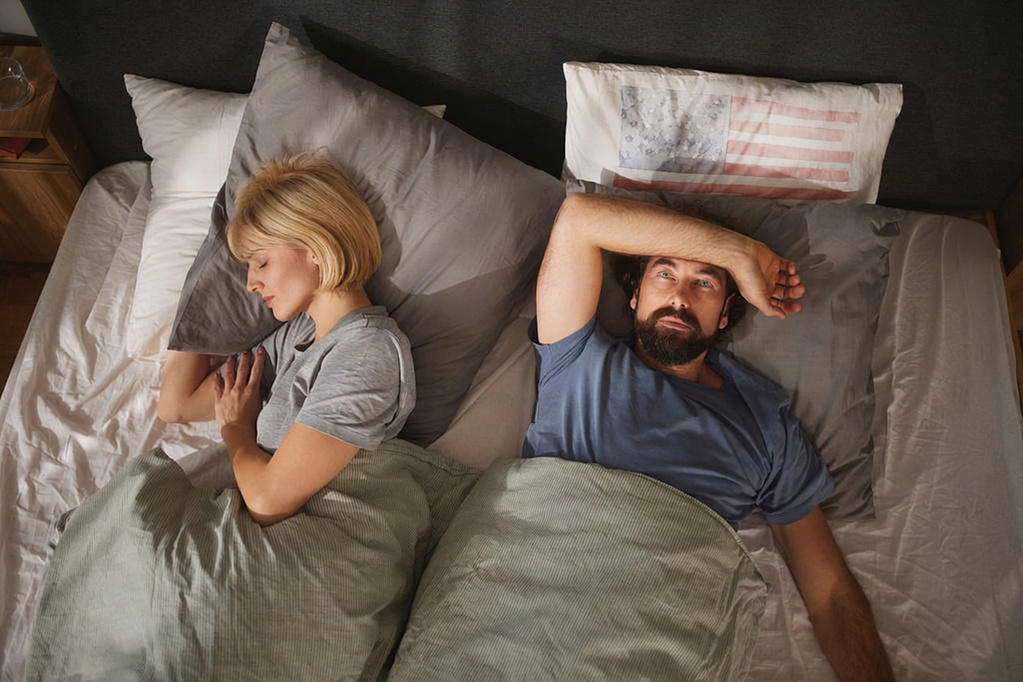
Sleep equity means that everyone should have a fair opportunity to get sleep and circadian support that protects health.

Healthy sleep is not equally available to everyone. A recommendation such as “keep a consistent schedule” may be useful, but it may not be realistic for someone working rotating shifts, caring for a family member overnight, living in crowded or noisy housing, managing financial stress, or trying to sleep in an unsafe environment. In addition to this, culture, race, language, and gender are shown to influence sleep equity.

A sleep equity approach includes individual education and support, while also recognizing the role of healthcare, schools, workplaces, housing, neighborhoods, public health systems, financial regulation and other public policies in shaping sleep and circadian health access.

Improving sleep equity means making healthy sleep more possible, protected, and valued for everyone.

Taking action for better sleep & circadian health

Everyone can play a role in supporting better sleep and circadian health. A good place to start is by using our website and resources to learn how sleep affects health, safety, mood, work, school, caregiving, and daily life. Downloading the State of Sleep in America report to understand why sleep is a public health matter, not just a personal one can help for starting discussions. People can also take action by having meaningful conversations with healthcare professionals about sleep concerns for themselves or loved ones so they can get the care they need. Asking workplaces, schools, and other organizations to consider how their decisions affect sleep and circadian health can also raise awareness and make a difference. And finally, connecting with and supporting organizations like WSCN that advocate for sleep health can help us keep working to advance sleep and circadian health for all.

References
  1. Benjafield, A. V., et al (2025). Estimation of the global prevalence and burden of insomnia: A systematic literature review-based analysis. Sleep Medicine Reviews, 82, 102121. https://doi.org/10.1016/j.smrv.2025.102121
  2. Centers for Disease Control and Prevention. (2024). Sleep Fast Stats. https://www.cdc.gov/sleep/data-research/facts-stats/index.html
  3. Hale, L., Troxel, W., & Buysse, D. J. (2020). Sleep health: An opportunity for public health to address health equity. Annual Review of Public Health, 41, 81–99. https://doi.org/10.1146/annurev-publhealth-040119-094412
  4. Ramar, K., et al (2021). Sleep is essential to health: An American Academy of Sleep Medicine position statement. Journal of Clinical Sleep Medicine, 17(10), 2115–2119. https://doi.org/10.5664/jcsm.9476
  5. DelRosso L. M. (2025). Global Perspectives on Sleep Health: Definitions, Disparities, and Implications for Public Health. Brain sciences, 15(3), 304. https://doi.org/10.3390/brainsci15030304
  6. C. Ou, N.M. Lou, C. Maheshka, M. Shi, K. Takemura, B. Cheung, & S.J. Heine, (2025) Healthy sleep durations appear to vary across cultures, Proc. Natl. Acad. Sci. U.S.A. 122 (19) e2419269122, https://doi.org/10.1073/pnas.2419269122
  7. Sleep Cycle Annual Report: Sleep Around The World (2025) https://storage.googleapis.com/media.sleepcycle.com/2/Sleep_Around_the_World.pdf

Medical disclaimer
This article is for educational purposes only and is not intended to replace professional medical advice, diagnosis, or treatment. Speak with a qualified healthcare professional about questions or concerns related to your sleep. Read full medical disclaimer

Related pages