
Sleep & Circadian Health

Sleep basics: what is sleep and why it matters

Sleep is an active process which is part of our 24 hour body rhythm – known as the circadian rhythm. The body is not simply “ON” during the day and “OFF” at night.

Sleep and circadian rhythms work together across the full day to help alignment and timing of alertness, hormone release, body temperature, digestion, metabolism, immune activity, and many other essential processes. This all happens on a carefully timed internal brain-body schedule, and sleep is an essential part of this 24 hour pattern. When sleep is disrupted, the circadian rhythm can start to break down, and have an impact on wellbeing.

Think of sleep as a part of whole-day health, rather than as an isolated night-time activity, and it becomes easier to understand how everything connects. Rather than focusing on sleep alone, you can treat each day as an opportunity to take positive steps towards gaining greater control of your health, and supporting your wellbeing around the circadian clock. So you can Own All 24 Hours.

This page introduces the basics: what sleep is, what happens during sleep, why sleep matters, and why healthy sleep is important for individuals and the whole community. Each section offers an opportunity to dive deeper into areas that interest you.

Overview

  • Sleep is an active biological process, the body does not “turn off”
  • During sleep, the brain and body cycle through four different stages of sleep
  • Sleep supports learning, memory, mood, immune function, metabolism, cardiovascular health, safety, and daily functioning
  • Healthy sleep is more than the number of hours slept: timing, regularity, continuity, daytime alertness, and satisfaction with sleep also matter
  • Work schedules, caregiving, housing, stress, discrimination, neighborhood conditions, healthcare access, and social policy can all affect sleep
  • About 1 in 3 US adults do not get enough sleep, and an estimated 50-70 million Americans are living with a sleep disorder
  • Human understanding of sleep and circadian medicine has changed significantly throughout history

What is sleep?

Sleep is a natural, recurring state in which awareness of the outside world is reduced, the body becomes less active, and the brain and body carry out essential work. 

Although sleep may look quiet from the outside, it is not passive. The sleeping brain remains active, and the body continues to regulate many processes that support health and function.

Sleep is shaped by at least two major systems:

  • Sleep pressure: The longer a person is awake, the stronger the biological drive for sleep becomes. One substance involved in this process is adenosine, which builds during waking hours and helps signal the need for sleep.
  • Circadian timing: The body’s internal clock helps time sleep and wakefulness across the 24-hour day. Light, meals, activity, social schedules, and daily routines can all help shift or reinforce this timing system.

Healthy sleep usually happens when sleep pressure and circadian timing are aligned. When they are out of sync, a person may have trouble falling asleep, staying asleep, waking up, or feeling alert during the day.

Learn about why we sleep, what makes us sleepy, and what happens during sleep.

What are the stages of sleep?

During sleep, the brain and body move through different stages. These stages are usually grouped into non-rapid eye movement sleep, often called non-REM sleep, and rapid eye movement sleep, often called REM sleep.

Each of these stages plays an important role in helping our brain and body recover from the day past, and to prepare for the next day ahead. This includes essential tasks like memory and learning consolidation, immune system  protection and metabolic maintenance, healing and repair of tissues. Each stage has unique characteristics that are required for sleep to provide all the benefits we need to live a healthy thriving life.

Learn about the sleep stages and the cycles of sleep.

Why do we sleep, and why does it matter?

Most people know from experience that sleep matters. A poor night of sleep, a disrupted schedule, or a body clock that feels out of sync can affect how a person feels, thinks, and functions the next day. On the other hand, we know how great it can feel when we get consistent sleep that refreshes energy and body rhythms.

Sleep supports health across the whole body. Sleep supports health across the whole body. Alongside nutrition and physical activity, sleep is increasingly recognized as a pillar of health because it helps the brain and body recover, regulate, learn, and prepare for the next day.

Healthy sleep is linked with:

  • Learning and memory
  • Mood and mental health
  • Daytime attention and safety
  • Immune function
  • Metabolism and hormones
  • Heart and blood vessel health
  • Growth, repair, and recovery

From this list we can see that poor sleep can have effects that show up both at night and during the day. It shows us how taking care of our sleep is one of the most important things that we can do for our overall health and wellbeing. 

In fact sleep is just as important as nutrition and exercise are for health. 
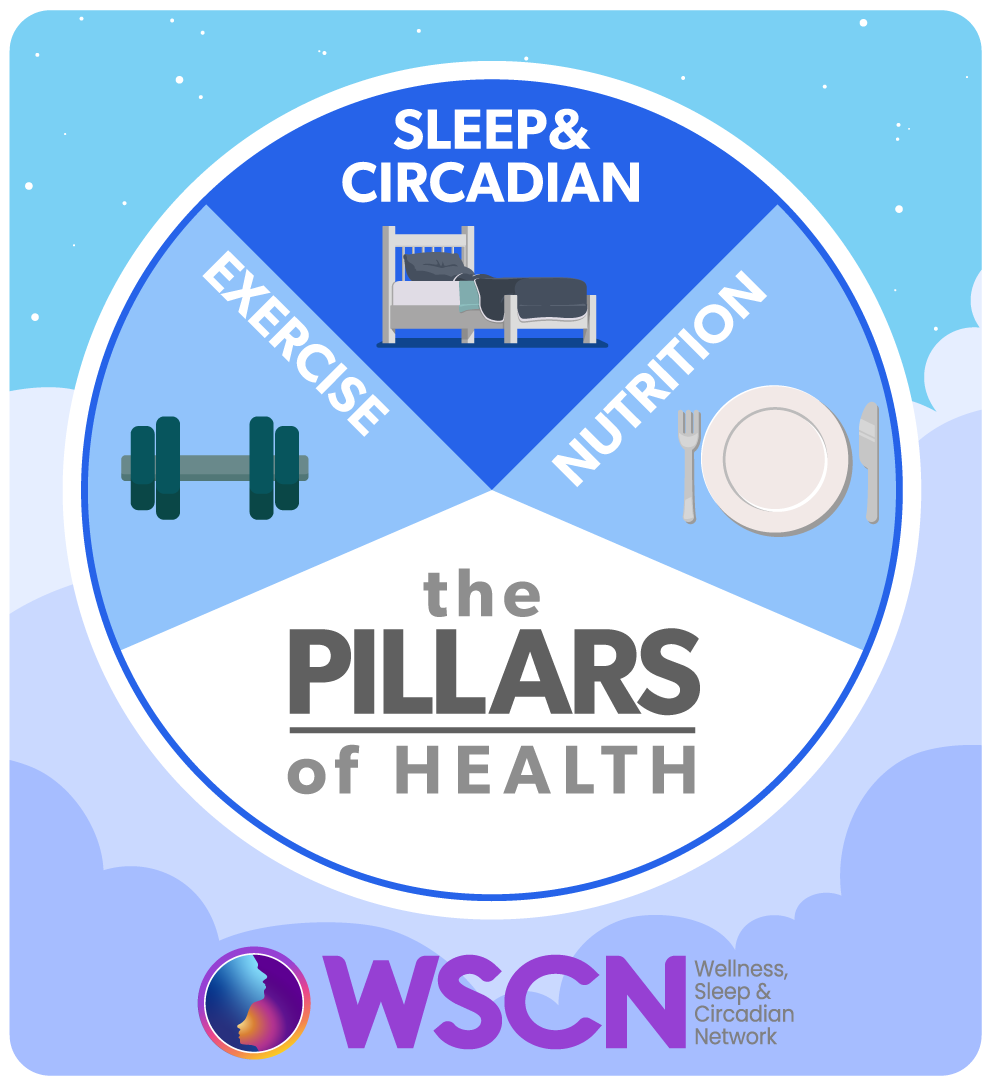
Learn more about the benefits and dimensions of sleep.

Sleep and circadian health – the body’s rhythm

Sleep and circadian rhythms are closely connected processes in the body, but they are not the same thing:

  • Sleep is the recurring state of reduced awareness and altered brain and body activity that allows essential restorative and regulatory processes to occur.
  • Circadian rhythms are internal biological rhythms that follow an approximately 24-hour cycle. They help time sleep and wakefulness, body temperature, hormone release, digestion, metabolism, alertness, and other essential body functions.
Sleep health and circadian health work together and directly influence each other, for better or worse. A person may have enough time for sleep but struggle if the timing is misaligned with the body clock. This can happen with shift work, jet lag, delayed sleep-wake timing, irregular schedules, caregiving demands, school start times, or social and work pressures that push sleep later or make wake times earlier. 

Learning more about how sleep and circadian health work together can help you take charge of your health to Own All 24 hours.

Learn more about the circadian rhythm and why it matters for your sleep and whole-person health.

The State of Sleep in the US and globally

Many people in the United States do not get the sleep they need. According to research, about 50 to 70 million Americans have sleep or circadian disorders, and around one in three adults do not regularly get the recommended amount of uninterrupted sleep needed to protect health.

Sleep concerns are also common globally. A recent systematic review estimated that about 16% of adults worldwide live with chronic, clinically relevant insomnia. Research also shows us that there are big differences in attitudes and cultural practices surrounding sleep and circadian health across the globe. Some cultures promote a “hustle” culture and skipping sleep for work, whilst other cultures embrace afternoon siestas and napping publicly in parks.

Understanding these patterns and data matter because sleep is connected with health, safety, productivity, emotional wellbeing, and quality of life. At WSCN we are dedicated to helping people understand that sleep is a pillar of health, not an optional extra. We encourage everybody from every walk of life to prioritize sleep and circadian health.

To learn more, explore the State of Sleep page and download the State of Sleep and Circadian Health in the US 2026 report.

Sleep equity: why healthy sleep is not equally available to everyone

Sleep advice often focuses on individual habits, such as keeping a consistent schedule, reducing caffeine late in the day, or creating a comfortable sleep environment. These habits can be helpful, but they are not equally easy for everyone to follow. Sometimes there are outside influences that make it hard to support sleep and circadian health.

This is because sleep and circadian health are shaped by the conditions in which people live, work, learn, and receive care. 

Sleep equity means that everyone should have a fair opportunity to get healthy sleep and circadian support. This includes education, clinical care, community resources, workplace and school policies, and public health approaches that make sleep possible, protected, and valued.

To learn more, explore our sleep equity page for a deeper look at who is most affected by poor sleep, why these gaps exist, and what can help make healthy sleep more possible for everyone.

The history of sleep and circadian

Looking back helps us understand where we are now—and where we are going next. Taking a journey through the history of sleep and circadian science can teach us important lessons, and offer some surprises. Discover how ancient Greeks thought about sleep, and how modern science has shown that humans, animals and plans all share biological rhythms that shape life.

References
  1. Buysse, D. J. (2014). Sleep health: Can we define it? Does it matter? Sleep, 37(1), 9–17. https://pmc.ncbi.nlm.nih.gov/articles/PMC3902880/
  2. Centers for Disease Control and Prevention. (2024). FastStats: Sleep in Adults. https://www.cdc.gov/sleep/data-research/facts-stats/adults-sleep-facts-and-stats.html
  3. Chattu, V. K., et al (2018). The global problem of insufficient sleep and its serious public health implications. Healthcare, 7(1), 1. https://doi.org/10.3390/healthcare7010001
  4. Consensus Conference Panel, Watson, N. F., et al (2015). Recommended amount of sleep for a healthy adult: A joint consensus statement of the American Academy of Sleep Medicine and Sleep Research Society. Sleep, 38(6), 843–844. https://pmc.ncbi.nlm.nih.gov/articles/PMC4442216/
  5. Fioroni, S., & Foy, D. (2024, April 15). Americans sleeping less, more stressed. Gallup. https://news.gallup.com/poll/642704/americans-sleeping-less-stressed.aspx

Medical disclaimer
This article is for educational purposes only and is not intended to replace professional medical advice, diagnosis, or treatment. Speak with a qualified healthcare professional about questions or concerns related to your sleep. Read full medical disclaimer

Related