
Sleep Problems & Disorders

Insomnia

Insomnia disorder is a sleep problem in which a person has ongoing difficulty falling asleep, staying asleep, waking too early, even when there is enough opportunity to sleep. Insomnia is usually experienced at nighttime, but it affects the whole 24 hours, impacting daytime energy, mood, thinking, safety, relationships, routines, and overall health.

Insomnia is common, real, and treatable. It is not a sign of poor discipline or lack of effort. For many adults, the most helpful step forward is a careful assessment to understand what is driving the sleep problem and whether another sleep, medical, mental health, medication, or lifestyle factor is contributing.

This page focuses on adult insomnia. Children and teens can also experience insomnia, but causes, assessment, and treatment approaches may differ. See Insomnia in Children and Teens.

Overview

  • Insomnia disorder involves difficulty sleeping plus daytime distress or impairment
  • Chronic insomnia usually means symptoms occur for at least three months
  • Insomnia can involve difficulty falling asleep and/or staying asleep, waking too early, or feeling that sleep is not restorative
  • Daytime effects may include fatigue, sleepiness, irritability, low mood, trouble concentrating, reduced performance, and safety concerns
  • Cognitive behavioral therapy for insomnia, often called CBT-I, is recommended as a first-line treatment for chronic insomnia in adults
  • Sleep medications may help some people in selected situations, but they should be discussed with a qualified clinician and are not the only treatment option

About insomnia

Insomnia is more than one difficult night. Most adults occasionally sleep poorly because of stress, illness, travel, pain, caregiving, schedule changes, or a disruptive sleep environment. Insomnia disorder is considered when sleep difficulty becomes persistent, causes distress or impairment, and is not better explained by another condition alone.

Clinicians often describe insomnia by timing:

  • Sleep-onset insomnia: difficulty falling asleep
  • Sleep-maintenance insomnia: difficulty staying asleep
  • Early-morning awakening: waking earlier than intended and being unable to return to sleep
  • Non-restorative sleep: sleep that does not feel refreshing, even when the person spends enough time in bed

Insomnia may be short-term or chronic. Short-term insomnia can last days or weeks and often occurs during stress, grief, illness, travel, or schedule disruption. Chronic insomnia typically occurs at least three nights per week for at least three months, and affects daytime function.

Insomnia is common in adults and is often under-recognized. Population estimates vary depending on the definition used, but insomnia symptoms are more common than diagnosed insomnia disorder. It can occur at any age in adulthood and is more common in women, older adults, people with medical or mental health conditions, caregivers, shift workers, and people living with chronic pain or high stress.

Signs and symptoms

Insomnia is often felt most strongly at night, but its effects can spread across the whole day. A difficult night can change alertness, patience, appetite, activity, social connection, and confidence in sleep the next night. 

Nighttime symptoms

A person may notice:

  • Lying awake for a long time before falling asleep
  • Waking many times during the night
  • Waking too early and being unable to return to sleep
  • Feeling alert, tense, or frustrated in bed
  • Rumination (repeatedly thinking about the same things)
  • Sleep that feels light, broken, or unrefreshing
  • Worry about being able to sleep

Daytime symptoms

Daytime effects may include:

  • Fatigue or low energy
  • Sleepiness or dozing unintentionally
  • Irritability, anxiety, or low mood
  • Difficulty concentrating, remembering, or making decisions
  • Reduced work performance or motivation
  • Headaches or physical tension
  • More caffeine use or irregular napping
  • Concern about driving, errors, or safety

It is useful to distinguish sleepiness from fatigue. Sleepiness means a tendency to doze or fall asleep. Fatigue means low energy or reduced capacity, even without a strong drive to sleep. A person with insomnia may experience one or both.

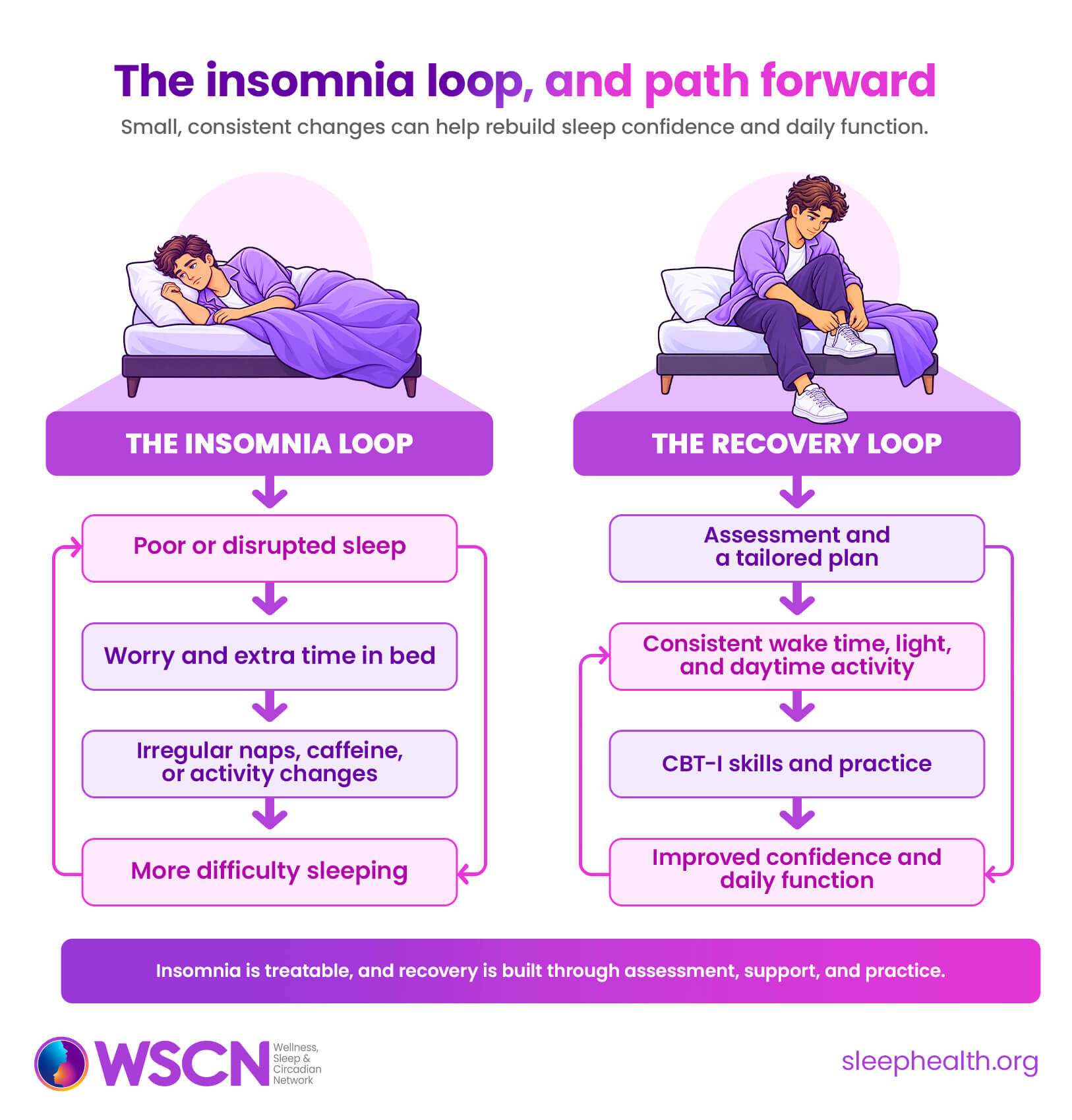
Over time, insomnia can create a self-reinforcing pattern. A person may spend more time in bed trying to catch sleep, nap irregularly, cancel daytime activities, increase caffeine, or begin to associate the bed with wakefulness and worry. These responses are understandable, but they can cause the body and brain to fall out of rhythm.

Insomnia interacts with circadian timing. The body clock helps regulate when sleep and alertness occur over a 24 hour period. External challenges to the circadian rhythm such as irregular schedules, evening light exposure, shift work, jet lag, inconsistent wake times, and long naps can make insomnia more difficult to resolve for some adults.

The 24-hour goal is not to “try harder” at bedtime. It is to build a pattern of sleep, light, activity, rest, meals, and daily supporting activities that help the body recognize when to be awake and when to sleep.
Screening and diagnosis

Insomnia is diagnosed through a clinical history. Before an appointment, it may help to track:

  • Bed and wake times
  • Estimated time it takes to fall asleep, and time spent in bed trying to sleep 
  • Nighttime awakenings (number, duration and timing)
  • Naps (number, duration, and timing)
  • Caffeine, alcohol, nicotine and other drug usage 
  • Light exposure, activity, and exercise timing
  • Pain, mood, stress, or problems with concentration and memory
  • Daytime sleepiness, fatigue, and safety concerns
  • Menstrual or menopause symptoms where relevant
  • List of other health conditions and medications

It is also helpful to note any treatments/remedies already tried and whether it helped, made sleep worse, or was hard to sustain.

A physician may use the following tools to help diagnose insomnia and create a treatment plan:

  • A sleep diary for one to two weeks
  • Questionnaires such as the Insomnia Severity Index
  • Actigraphy – a wearable tracking device that measures sleep and activity 
  • Review of medications and substances
  • Review the sleep environment and sleep hygiene practices
  • Screening for other conditions that may cause insomnia

A sleep study is not required for most adults with straightforward insomnia. It may be recommended if symptoms suggest another sleep disorder. Loud snoring, gasping, witnessed breathing pauses, unusual movements, severe daytime sleepiness, or treatment-resistant insomnia may indicate another sleep disorder is present.

When to talk with a healthcare professional

A person does not need to know the name or exact nature of a condition before asking for help. If a person experiences any of the symptoms above, it is appropriate to discuss them with a healthcare professional. 

Red Flag: Seek urgent medical care if symptoms or sleep loss are affecting a person’s ability to drive or work safely, or is causing severe distress or thoughts of self-harm.

What to bring to a doctor’s visit

A primary care physician is a good place to start for a sleep disorder evaluation. They can conduct preliminary screenings and recommend next steps for diagnosis. It can be helpful to bring information to an initial visit: try using WSCN’s How to talk to your primary care clinician about sleep problems checklist.

Causes, risk factors and health implications

Causes and risk factors

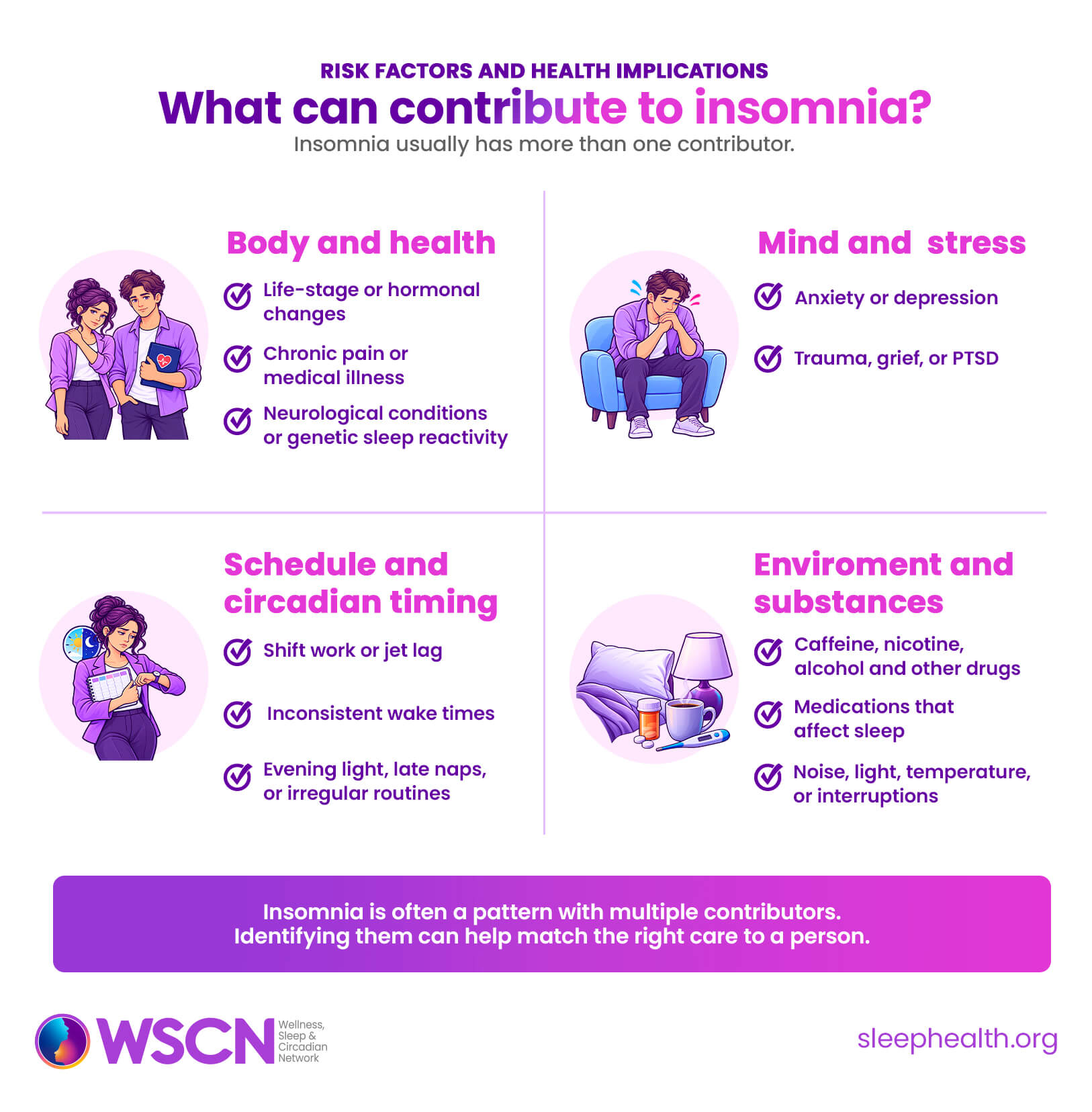
There is no one cause for insomnia, and it usually has more than one contributor.

  • Biological and life-stage factors may include age, sex hormones, pregnancy, perimenopause, menopause, chronic pain, medical illness, neurological conditions, and genetic or temperament differences in sleep reactivity
  • Mental health and stress factors may include anxiety, depression, trauma, grief, caregiving stress, work stress, PTSD, or a period of heightened alertness that does not switch off easily at night
  • Schedule and circadian factors may include shift work, jet lag, inconsistent wake times, evening light exposure, long or late naps, and irregular daily routines
  • Medication and substance factors may include caffeine, nicotine, alcohol, some antidepressants, stimulants, corticosteroids, decongestants, and other recreational drugs and medications that can affect sleep
  • Sleep environment and behavior factors may include noise, light, temperature, bed partner disruption, caregiving interruptions, spending long periods awake in bed, or using the bed for wakeful activities like TV

These factors are not personal failures. Identifying contributing factors helps match the treatment plan to the person.
Long-term health implications

Untreated chronic insomnia can affect more than sleep. Over time, persistent poor sleep may contribute to or worsen several areas of health, especially when it occurs alongside other risk factors.

  • Heart and blood vessel health: Chronic insomnia has been associated with higher risk of high blood pressure, cardiovascular disease, and stroke. Sleep disruption may affect blood pressure regulation, inflammation, and stress-response systems.
  • Metabolic health: Ongoing insomnia may contribute to changes in glucose regulation, insulin sensitivity, appetite hormones, and weight-related health risks. It is also associated with higher risk of type 2 diabetes.
  • Mental health: Insomnia can increase the risk of developing or worsening depression, anxiety, irritability, and emotional distress. The relationship is bidirectional: mental health symptoms can worsen sleep, and poor sleep can make mental health symptoms harder to manage.
  • Cognitive function and daily performance: Persistent insomnia can affect attention, memory, reaction time, decision-making, and work performance. These effects may increase the risk of errors, injuries, and drowsy driving.
  • Pain and inflammation: Poor sleep can lower pain tolerance and may worsen chronic pain conditions. It may also interact with inflammatory pathways, although the exact long-term implications vary by person and condition.
  • Immune and whole-body health: Chronic sleep disruption may affect immune function and recovery from illness. It can also reduce the energy and capacity needed to maintain daily health routines, such as physical activity, meal planning, and medical follow-up.
  • Quality of life and relationships: Untreated insomnia can affect mood, social connection, caregiving, sex and intimacy, and participation in work or community life. These effects are important health outcomes, not secondary concerns.

These links do not mean insomnia causes these conditions in every person. They do mean that persistent insomnia deserves care and treatment. It should be considered part of whole-person, 24-hour health and wellness.

Treatment and management

Treatment aims to improve sleep, daytime function, confidence, safety, and quality of life. The best plan depends on the person’s symptoms, health history, preferences, and access to care.

Cognitive behavioral therapy for insomnia

Cognitive behavioral therapy for insomnia (CBT-I) is a structured, evidence-based treatment for chronic insomnia. It is recommended as a first-line treatment for adults by major clinical guidelines. CBT-I usually includes several components, such as:

  • Sleep education
  • Stimulus control, which helps rebuild the bed as a cue for sleep
  • Sleep restriction or sleep compression, which carefully adjusts time in bed to strengthen sleep drive
  • Cognitive strategies for sleep-related worry
  • Relaxation or wind-down skills
  • Circadian rhythm and routine support

CBT-I can be delivered individually, in groups, through trained clinicians, or through validated online telehealth programs. It is not the same as general sleep hygiene, although sleep habits may be discussed.

Sleep medications

Prescription or over-the-counter sleep medications may be appropriate for some adults, especially for short-term situations or when insomnia is severe. Medication may reduce symptoms, but it does not always address the learned, behavioral, circadian, or medical contributors that keep insomnia going. Some people benefit from medication combined with CBT-I or another structured plan. Medication should always be discussed with and used as directed by a qualified healthcare provider.

Treating contributing conditions

If insomnia is related to pain, menopause symptoms, depression, anxiety, sleep apnea, restless legs syndrome, medication effects, or shift work, those factors may need direct treatment with the appropriate healthcare provider. For many adults, insomnia improves most when both the insomnia pattern and the contributing condition are addressed.

Research and what we are still learning

Insomnia research is expanding in several areas: digital CBT-I access, treatment for insomnia with other medical and mental health conditions, safer medication use, combined behavioral and medication approaches, biological subtypes of insomnia, and how insomnia affects cardiovascular, metabolic, cognitive, and mental health outcomes over time.

Researchers are also studying how to make effective care more accessible. This matters because many adults with insomnia do not have easy access to clinicians trained in CBT-I.

Access to care matters

CBT-I is recommended as first-line care for insomnia, but access to treatment remains limited due to factors such as insurance gaps, financial challenges and language barriers. App-based digital, virtual and stepped-care models are being studied as ways to reach more adults to overcome these access issues.
References

Edinger, J. D., Arnedt, J. T., Bertisch, S. M., et al. (2021). Behavioral and psychological treatments for chronic insomnia disorder in adults: An American Academy of Sleep Medicine clinical practice guideline. Journal of Clinical Sleep Medicine, 17(2), 255–262. https://doi.org/10.5664/jcsm.8986

Qaseem, A., Kansagara, D., Forciea, M. A., et al. (2016). Management of chronic insomnia disorder in adults: A clinical practice guideline from the American College of Physicians. Annals of Internal Medicine, 165(2), 125–133. https://doi.org/10.7326/M15-2175

Riemann, D., Espie, C. A., Altena, E., et al. (2023). The European Insomnia Guideline: An update on the diagnosis and treatment of insomnia 2023. Journal of Sleep Research, 32(6), e14035. https://doi.org/10.1111/jsr.14035

Simon, L., Steinmetz, L., Feige, B., et al. (2023). Comparative efficacy of onsite, digital, and other settings for cognitive behavioral therapy for insomnia: A systematic review and network meta-analysis. Scientific Reports, 13, 1929. https://doi.org/10.1038/s41598-023-28853-0

Sweetman, A., Lack, L., Catcheside, P., et al. (2021). Developing a successful treatment for co-morbid insomnia and sleep apnoea. Sleep Medicine Reviews, 57, 101431. https://pubmed.ncbi.nlm.nih.gov/27401786/

Van Straten, A., van der Zweerde, T., Kleiboer, A., et al. (2018). Cognitive and behavioral therapies in the treatment of insomnia: A meta-analysis. Sleep Medicine Reviews, 38, 3–16. https://doi.org/10.1016/j.smrv.2017.02.001

Zhang X, Sun Y, Ye S, et al. (2024). Associations between insomnia and cardiovascular diseases: a meta-review and meta-analysis of observational and Mendelian randomization studies. J Clin Sleep Med. 2024 Dec 1;20(12):1975-1984. doi: 10.5664/jcsm.11326. PMID: 39167428; PMCID: PMC11609828. https://pmc.ncbi.nlm.nih.gov/articles/PMC11609828/

Kim JW, Jain AB, Khullar A. (2025). Insomnia and Cardiometabolic Health: Bridging the Gap Between Sleep Deficit and Disease Prevention. Can J Diabetes. 2025 Jul-Aug;49(5-6):342-350. doi: 10.1016/j.jcjd.2025.04.008. Epub 2025 Apr 26. Erratum in: Can J Diabetes. 2026 Mar;50(2):64. doi: 10.1016/j.jcjd.2026.01.002. PMID: 40294819. https://pubmed.ncbi.nlm.nih.gov/40294819/

Perlis ML, Posner D, Riemann D, et al. (2022). Insomnia. Lancet. 2022 Sep 24;400(10357):1047-1060. doi: 10.1016/S0140-6736(22)00879-0. Epub 2022 Sep 14. PMID: 36115372. https://pubmed.ncbi.nlm.nih.gov/36115372/


Medical disclaimer
This article is for educational purposes only and is not intended to replace professional medical advice, diagnosis, or treatment. Speak with a qualified healthcare professional about questions or concerns related to your sleep. Read full medical disclaimer