
Sleep Problems & Disorders

Central Sleep Apnea in Adults

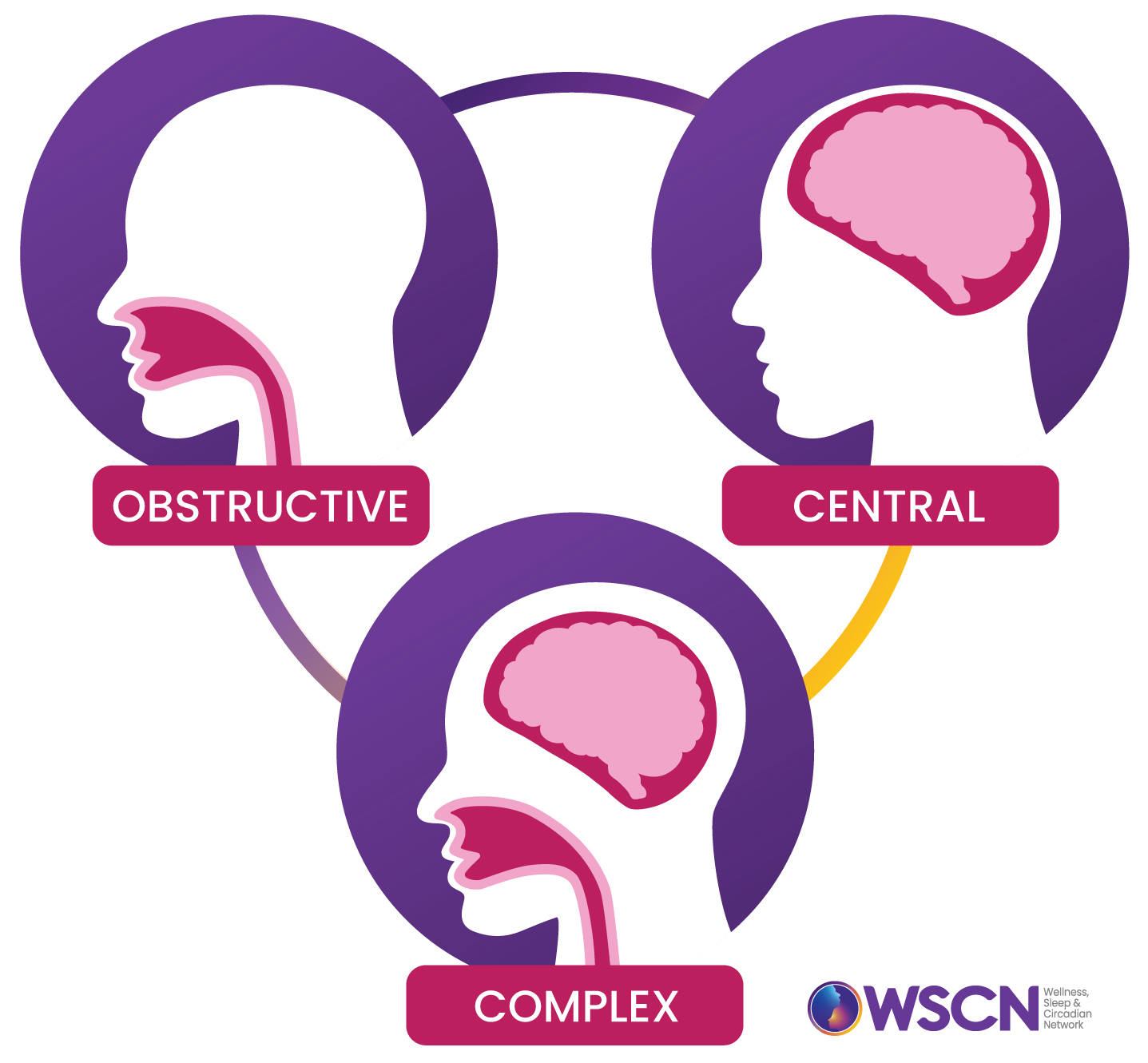
Central sleep apnea, also called CSA, is a sleep-related breathing disorder. During sleep, breathing repeatedly slows down or briefly stops because the brain and nervous system are not sending steady signals to the muscles that control breathing. Central sleep apnea is different from obstructive sleep apnea, which involves the airway narrowing or closing. 

Fortunately, central sleep apnea can be evaluated, and treatment can be tailored to the underlying cause and personal goals of each individual. 

Overview

  • Central sleep apnea causes repeated pauses or reductions in breathing effort during sleep.
  • It is less common than obstructive sleep apnea and is often linked with another health factor, such as heart failure, stroke, certain medications, high altitude, or another medical condition.
  • Symptoms may include disrupted sleep, waking short of breath, witnessed breathing pauses, daytime sleepiness, fatigue, morning headaches, and reduced concentration.
  • Diagnosis usually requires an overnight sleep study, called polysomnography 
  • Treatment depends on the cause and may include optimizing care for underlying conditions, positive airway pressure therapy, oxygen, medication changes, adaptive servo-ventilation, or phrenic nerve stimulation in selected adults.
  • Central sleep apnea affects more than the night. It can shape daytime alertness, mood, safety, relationships, and confidence across the whole 24-hour day.

What is central sleep apnea?

Central sleep apnea, often shortened to CSA, is a type of sleep-disordered breathing. It happens when breathing becomes unstable during sleep and the body temporarily reduces or stops the effort to breathe.

Breathing is controlled by signals between the brain, nervous system, certain organs, and breathing muscles. During sleep, this system normally adjusts breathing in response to oxygen and carbon dioxide levels. In central sleep apnea, that control system becomes unstable or disrupted. Breathing pauses, restarts, and then pauses again.

Central sleep apnea can feel confusing because many people notice the daytime effects before they know what is happening at night. Sleep may feel disrupted, unrefreshing, or restless. A partner may notice pauses in breathing. Some people wake short of breath or feel unusually sleepy, fatigued, foggy, or less able to function during the day.

Central sleep apnea is not one single condition. It can happen in several patterns, including:

  • Primary central sleep apnea: central apneas occur without a clearly identified cause.
  • Central sleep apnea with Cheyne-Stokes breathing: breathing gradually increases and decreases in a repeating pattern, often associated with heart failure, stroke, and some other medical conditions.
  • Central sleep apnea due to a medical condition: central apneas can occur in connection with another condition affecting the heart, kidneys, brain, nervous system, or breathing control.
  • High-altitude periodic breathing: central apneas occur or worsen at high altitude, where oxygen levels are lower.
  • Central sleep apnea due to medication or substance use: this can occur with opioids and some other substances that affect breathing control.
  • Treatment-emergent central sleep apnea: central apneas appear or become more noticeable after treatment begins for obstructive sleep apnea, usually with positive airway pressure therapy.

Because central sleep apnea can have different causes, evaluation is very important. The goal is not only to count breathing events. The goal is to understand what is driving them, how they affect the person’s sleep and daytime life, and what treatment plan is most appropriate.
Signs and symptoms

Central sleep apnea symptoms don’t only happen during sleep – they can affect the entire 24-hour day.  In fact, daytime symptoms may be the first effects that someone with CSA notices. Living with CSA means ensuring that both daytime and nighttime symptoms are addressed to improve holistic health across the whole 24-hours.

Nighttime symptoms

A person with central sleep apnea may notice:

  • Waking up gasping, choking, or short of breath
  • restless or disrupted sleep
  • frequent awakenings
  • difficulty staying asleep
  • pauses in breathing noticed by a partner, roommate, or caregiver

Some people do not remember waking during breathing pauses. The brain may briefly shift into lighter sleep so breathing can restart, but the person may not be fully aware of the partial wakening.

Daytime symptoms

When breathing repeatedly slows or pauses during sleep, the brain and body may move out of stable sleep again and again. Oxygen levels may drop, and heart rate and blood pressure patterns may change. Sleep may become fragmented, even if the person does not fully wake up each time. The sleep disruptions and physiological changes caused by CSA don’t end upon waking up; they affect quality of life during the day.

Daytime symptoms may include:

  • Sleepiness during the day
  • fatigue or low energy
  • morning headaches
  • trouble concentrating, memory or attention problems
  • low mood, irritability, or reduced motivation
  • reduced exercise tolerance or shortness of breath, especially if a heart or lung condition is also present
  • feeling unrefreshed, even after enough time in bed

Central sleep apnea can be missed when symptoms are blamed on stress, aging, insomnia, medication effects, or another medical condition. Those factors may matter, but breathing during sleep may also need evaluation and treatment.

Symptoms of CSA vary greatly from person to person. A bed partner’s observations can be important. If someone notices repeated pauses in breathing, unusual breathing patterns, or frequent awakenings, that information can help a clinician decide what testing is needed.

Screening and diagnosis

Central sleep apnea should be evaluated by a qualified healthcare professional, often a sleep medicine clinician. Some people may also need care from other specialists, depending on the cause of their CSA.

Sleep testing

The main diagnostic test for central sleep apnea is polysomnography, an overnight sleep study. This test can measure breathing airflow and effort, oxygen levels, sleep stages, brain activity during sleep, heart rhythm, body position, limb movements, and awakenings and sleep fragmentation.

A sleep study can help distinguish central sleep apnea from obstructive sleep apnea and other sleep disorders. It can also show whether central and obstructive events are both present. In some cases, a second sleep study may be used to test treatment settings, such as positive airway pressure settings.

When to talk to a doctor

A person should seek an appointment with a medical professional if:

  • They experience any of the symptoms listed above
  • sleep loss is affecting their ability to drive or work safely
  • sleep loss is causing severe distress or thoughts of self-harm

How to get help

A primary care clinician is a good first step for diagnosing sleep disorders. For a list of information and questions to bring to an appointment, check out WSCN’s How to talk to your primary care clinician about sleep problems checklist.

Causes, risk factors and health implications

Central sleep apnea is more likely in some adults because of medical conditions, medications, altitude, or breathing-control instability. These factors can cause or contribute to CSA.

Medical contributors

Central sleep apnea may be partially caused by or associated with:

  • Cardiovascular issues, including heart failure, atrial fibrillation, and stroke
  • kidney disease
  • neurologic disorders or neuromuscular conditions

In Cheyne-Stokes breathing, breathing follows a repeating rise-and-fall pattern. This pattern is especially important to evaluate because it can be linked with heart failure or neurologic disease.

Medication and substance contributors

Opioid medications can increase the risk of central sleep apnea by reducing breathing drive during sleep. Risk may be higher with long-term use and higher doses, although individual risk varies.

Other sedating substances may also affect breathing, alertness, or sleep quality. Medication changes should always be discussed with a clinician. People should not stop prescribed medications suddenly unless instructed by a qualified healthcare professional.

High altitude

At high altitude, lower oxygen levels can lead to periodic stops in breathing during sleep. This may improve after descending to lower altitude or after acclimatization. Some people may need medical advice before travel to high altitude, especially if they have heart, lung, or neurologic conditions.

Treatment-emergent CSA

Some adults being treated for obstructive sleep apnea develop central apneas after starting positive airway pressure therapy. In some cases, these events improve over time. In other cases, treatment settings or treatment type may need to be reviewed and adjusted by a sleep clinician.

Age and sex

Central sleep apnea is more common in older adults and in men in several CSA patterns, although it can occur in people of any sex or gender.

Treatment and management

Treatment for central sleep apnea depends on many factors: the cause, the type of breathing pattern, symptoms, and the person’s goals.

Treatment goals

The 2025 American Academy of Sleep Medicine guideline emphasizes that clinicians should prioritize optimizing treatment for the conditions contributing to central apneas and improving patient-reported outcomes, rather than focusing only on eliminating breathing events on a sleep study.⁠⁠

Treatment may aim to improve objective metrics like apneas and oxygen levels, patient-centered outcomes like quality of life issues, and improve overall health and safety by addressing underlying health conditions.

Treating underlying contributors

For many adults, management begins with identifying and treating contributing conditions. This may include optimizing treatment for heart failure, reviewing stroke or neurologic care, addressing kidney disease, evaluating lung or breathing conditions, or reviewing medications.

If opioids or other substances may be contributing, clinicians may discuss whether medication changes are possible. This should be done carefully and collaboratively, especially when medications are being used for pain, substance use disorder treatment, palliative care, or other complex needs. The benefits of discontinuing a medication need to be carefully weighed against the benefit the medication is providing, and should consider the efficacy of alternative treatments.

Positive airway pressure therapy

Positive airway pressure, or PAP, uses a machine and mask to support breathing during sleep. Options may include:

  • CPAP, or continuous positive airway pressure: provides a steady level of air pressure.
  • Bilevel PAP with a backup rate: provides different pressures for inhaling and exhaling and can deliver timed breaths if breathing pauses.
  • Adaptive servo-ventilation, or ASV: adjusts support breath-by-breath to stabilize breathing patterns.

The 2025 AASM guideline conditionally suggests CPAP or bilevel PAP with a backup rate for several types of CSA. ASV may also be considered for selected adults with CSA, but all treatments require careful clinical decision-making. ASV in particular should involve shared decision-making, careful evaluation of quality-of-life improvement, and experienced centers with close monitoring and follow-up.⁠⁠

People already using PAP therapy should not change pressure settings on their own. If therapy feels uncomfortable or symptoms continue, a sleep clinician can review the device data, mask fit, pressure settings, oxygen levels, and whether another treatment approach is needed.

Oxygen therapy

Low-flow oxygen may be considered for some adults with central sleep apnea due to heart failure or high altitude. Oxygen should be used only under medical guidance, especially for people with heart, lung, or neurologic conditions.

Acetazolamide

Acetazolamide is a medication that can affect breathing control and may be used in selected cases, including some forms of CSA and high-altitude periodic breathing. The AASM guideline conditionally suggests acetazolamide for several adult CSA types. This medication is not right for everyone. A clinician should review possible benefits, side effects, other medical conditions, and medication interactions.

Transvenous phrenic nerve stimulation

Transvenous phrenic nerve stimulation uses an implanted device to stimulate the nerve that helps control the diaphragm, a major breathing muscle. It may be considered for selected adults with primary CSA or CSA due to heart failure. The AASM guideline notes that because this treatment requires an invasive procedure, may not be widely available, and can be costly, other treatments may be considered first.⁠⁠

High-altitude management

If central sleep apnea is related to high altitude, management may include time for acclimatization, descent to lower altitude, oxygen, acetazolamide, or individualized travel planning. People with heart or lung disease should ask a clinician about altitude risk before travel.

Follow-up matters

Central sleep apnea treatment often requires follow-up. A plan may need adjustment if symptoms continue, mask comfort is poor, oxygen levels remain low, heart function changes, medications change, or breathing patterns evolve. Follow-up should include consideration of the person’s lived experience: sleep quality, daytime function, energy, mood, safety, and treatment burden.

Research and what we are still learning

Central sleep apnea research continues to evolve. Important areas include:

  • How to personalize treatment by CSA type and underlying cause
  • which treatments improve symptoms, quality of life, cardiovascular outcomes, and long-term health
  • how central sleep apnea interacts with heart failure and stroke recovery
  • how opioid-related CSA can be managed safely and compassionately
  • how newer technologies, including phrenic nerve stimulation and advanced PAP devices, affect patient-centered outcomes

A key direction in recent guidance is the focus on patient-reported outcomes, not only sleep study numbers. This means asking whether treatment helps the person sleep better, feel safer, function during the day, and manage the full 24 hours with more confidence.⁠⁠

References

American Academy of Sleep Medicine. (2026). Central sleep apnea. Sleep Education. https://sleepeducation.org/sleep-disorders/central-sleep-apnea/

Badr, M. S., Khayat, R. N., Allam, J. S., et al. (2025). Treatment of central sleep apnea in adults: An American Academy of Sleep Medicine clinical practice guideline. Journal of Clinical Sleep Medicine, 21(12), 2181–2191. https://doi.org/10.5664/jcsm.11858

Javaheri, S., McKane, S. W., Cameron, N., et al. (2019). In patients with heart failure the burden of central sleep apnea increases in the late sleep hours. Sleep, 42(1). https://doi.org/10.1093/sleep/zsy195

Haack M, Simpson N, Sethna N, et al. Sleep deficiency and chronic pain: potential underlying mechanisms and clinical implications. Neuropsychopharmacology. 2020 Jan;45(1):205-216. doi: 10.1038/s41386-019-0439-z. Epub 2019 Jun 17. PMID: 31207606; PMCID: PMC6879497. https://pmc.ncbi.nlm.nih.gov/articles/PMC6879497/

Morgenthaler, T. I., Kagramanov, V., Hanak, V., & Decker, P. A. (2006). Complex sleep apnea syndrome: Is it a unique clinical syndrome? Sleep, 29(9), 1203–1209. https://pubmed.ncbi.nlm.nih.gov/17040008/

Morgenthaler, T. I., Aurora, R. N., Brown, T., Z et al. (2012). The treatment of central sleep apnea syndromes in adults: Practice parameters with an evidence-based literature review and meta-analyses. Sleep, 35(1), 17–40. https://doi.org/10.5665/sleep.1580

Oldenburg, O., Wellmann, B., Buchholz, A., et al. (2016). Nocturnal hypoxaemia is associated with increased mortality in stable heart failure patients. European Heart Journal, 37(21), 1695–1703. https://doi.org/10.1093/eurheartj/ehv624

Randerath, W., Verbraecken, J., Andreas, S., et al. (2017). Definition, discrimination, diagnosis and treatment of central breathing disturbances during sleep. European Respiratory Journal, 49(1), 1600959. https://doi.org/10.1183/13993003.00959-2016


Medical disclaimer
This article is for educational purposes only and is not intended to replace professional medical advice, diagnosis, or treatment. Speak with a qualified healthcare professional about questions or concerns related to your sleep. Read full medical disclaimer