
Across The Body
Sleep, Circadian Rhythms and Cancer
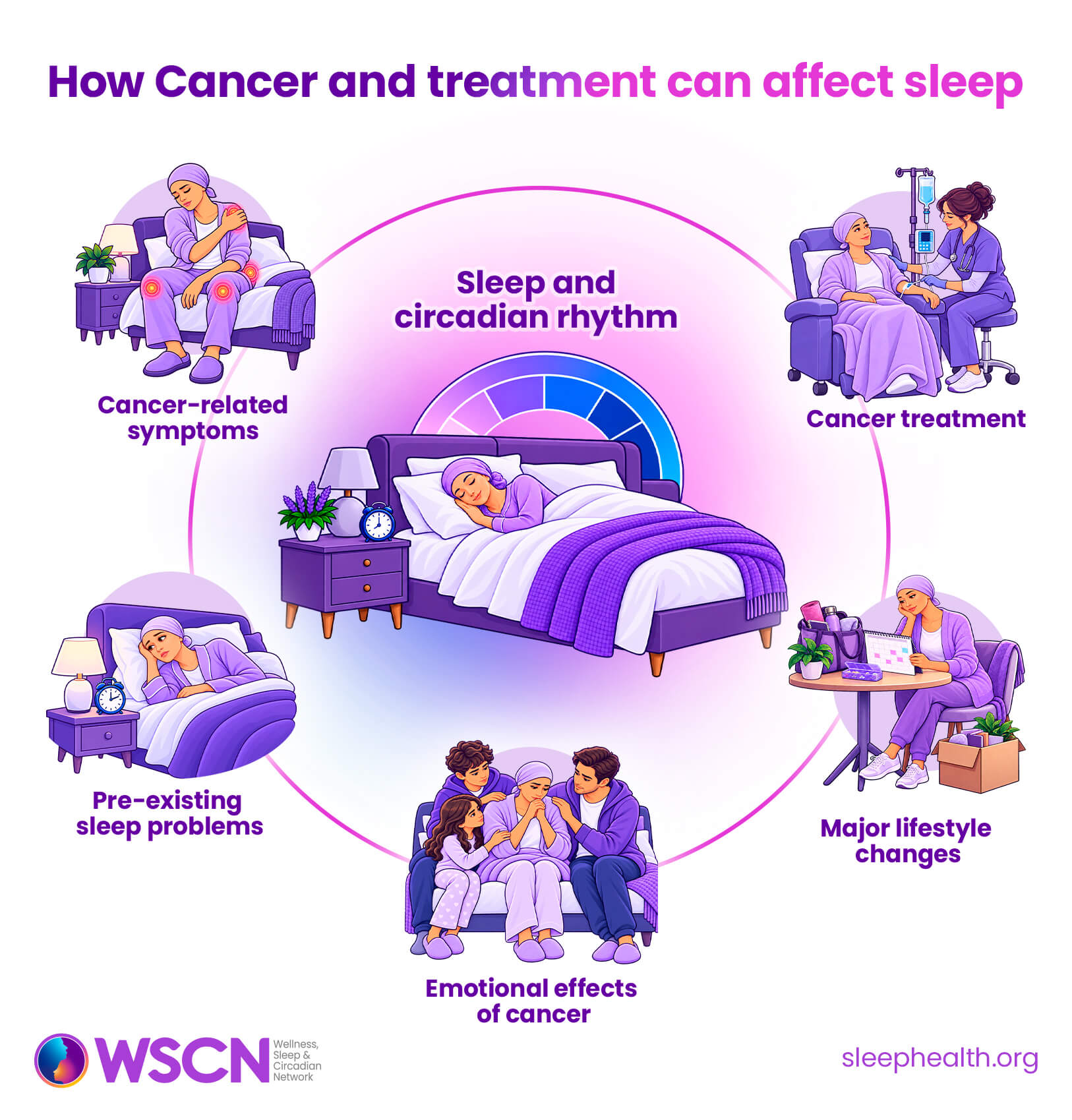
Sleep and cancer are closely connected, but the relationship is complex. Sleep problems are common after a cancer diagnosis and can develop or become worse during treatment. For some people, they continue well into recovery and survivorship.
Cancer symptoms, treatments, and medications can interfere with sleep and disrupt circadian rhythms. The emotional impact of a cancer diagnosis can also make it difficult to fall asleep or stay asleep. Changes in activity and daily routines can add to the disruption. Research suggests that around 6 in 10 people with cancer experience some form of sleep disturbance, although rates vary widely between cancer types, stages, and treatments.
Researchers are also studying whether poor sleep and disrupted circadian rhythms influence cancer risk or outcomes. Sleep interacts with immune function, hormones, metabolism, and other biological processes involved in cancer. However, the evidence does not show that poor sleep itself causes cancer or that improving sleep can prevent cancer from progressing or returning.
Looking across the full 24-hour cycle can help people recognize connections between sleep, circadian rhythms, cancer treatment, symptoms, and daytime function. It can also reveal opportunities for change, whether that means adjusting daily routines, identifying a sleep problem that needs treatment, or finding other ways to better support sleep and well-being.
Overview
- Sleep problems are common during cancer diagnosis, treatment, and survivorship.
- Cancer and its treatment can disrupt circadian rhythms, affecting the body’s normal 24-hour patterns of sleep, activity, hormones, metabolism, and immune function.
- Circadian rhythms are also involved in biological processes relevant to cancer, including cell growth, DNA repair, inflammation, and hormonal signaling.
- Insomnia is the most common clinically significant sleep disorder in people with cancer.
- Cancer symptoms and treatment side effects can interfere with sleep.
- Cancer-related fatigue and sleepiness can occur together, but they are not the same thing.
- Research has linked some forms of disrupted sleep with cancer outcomes, but this does not show that poor sleep causes cancer or cancer progression.
- Sleep problems can often be identified and treated.
- Looking across the full day and night can help reveal patterns between sleep, treatment, symptoms, and daily routines.
ON THIS PAGE
-
How sleep and cancer are connected
-
24-hour view: Circadian rhythm and cancer care
-
How cancer and cancer treatment can affect sleep
-
Common sleep problems in people with cancer
-
How poor sleep may affect health during and after cancer
-
How sleep can change across the cancer care continuum
-
Treating sleep problems during and after cancer
-
Sleep concerns to discuss with the care team
-
What to track before an appointment
How sleep, circadian rhythms and cancer are connected
Cancer is not one disease. It is a large group of diseases in which abnormal cells grow uncontrollably and can sometimes spread to other parts of the body. Cancer can develop in almost any tissue or organ, and different cancers can behave very differently.
Cancer is also very common. In 2024, an estimated 20.6 million people worldwide were diagnosed with cancer, and about 1 in 5 people will develop cancer during their lifetime. The most commonly diagnosed cancers worldwide are lung, breast, colorectal, prostate, and stomach cancers.
Although cancers share some biological features, the way sleep and circadian rhythms interact with cancer may vary by cancer type and its underlying biology. Findings from one cancer may therefore not apply to another.
Even so, researchers have identified several biological processes that may help explain why sleep and circadian rhythms are being studied in cancer.
- Immune function and inflammation: The immune system helps recognize and respond to abnormal cells. Sleep disruption can alter immune activity and increase inflammation in the body. Because inflammation and immune function also influence how some tumors develop and grow, researchers are studying whether persistent sleep disruption could affect these processes in people with cancer.
- Cell growth and DNA repair: Circadian clocks help regulate when cells divide, repair damaged DNA, and die when they are damaged or no longer needed. Laboratory studies show that disrupting these rhythms can interfere with these controls and, in some models, promote abnormal cell growth.
- Hormonal signals: Hormones such as melatonin and cortisol follow strong day-night rhythms. Changes in these rhythms can affect immune activity, inflammation, and signals involved in cell growth. Altered cortisol rhythms have also been observed in several cancer populations, although their role in cancer progression is not yet clear.
- Tumor environment: Laboratory studies suggest that disrupted sleep and circadian rhythms may affect conditions around a tumor that can influence its growth. Much of this evidence comes from animal or laboratory research, and the effects may differ between cancer types.
These findings help explain how sleep and circadian rhythms could be connected with cancer biology. However, they do not prove that poor sleep causes cancer or makes cancer progress. Studies in people have found links between sleep and cancer outcomes, but they cannot show that poor sleep is the cause. Findings vary considerably between different cancers.
24-hour view: Circadian rhythms and cancer care
Sleep is one part of the body’s broader 24-hour circadian system. This internal timing system helps coordinate when we feel awake and when we feel ready to sleep. It also helps organize daily patterns in hormones, metabolism, immune activity, and other biological processes.
These rhythms are influenced by signals from both inside and outside the body. Light and darkness are especially important, but activity, meals, medications, and regular daily routines can also help reinforce the distinction between day and night.
Cancer and its treatment can disrupt these rhythms in several ways. For example:
- Treatment schedules and hospital stays may change usual sleep, meal and activity times.
- Fatigue can reduce daytime activity or lead to more frequent or longer naps.
- Pain, nausea, hot flashes and other symptoms may interrupt nighttime sleep or change when someone rests during the day.
- Medications can affect alertness or sleepiness and may have different effects depending on when they are taken.
- Less exposure to daylight may occur when someone is spending more time indoors, resting or recovering from treatment.
- Changes in appetite or meal timing can alter the usual structure of the day.
- Emotional stress can make it harder to wind down at night and may also affect daytime routines.
These changes can sometimes reinforce one another. A difficult night may lead to more napping or less activity the next day. That may reduce the natural buildup of sleepiness by evening, making the next night’s sleep more difficult. Over time, the usual distinction between daytime activity and nighttime rest can become less clear.
The connection also works in the other direction. What happens during waking hours sends signals that help the body maintain its daily rhythm. These include:
- Daylight, particularly earlier in the day
- Physical activity and movement
- Regular sleep and wake times
- Meal timing
- Medication and treatment schedules
- Social activity and other regular daytime routines
During cancer treatment, people may have limited control over many of these factors. Treatment schedules, symptoms, and necessary rest often take priority. The goal is not to create a perfect daily routine, but to understand how changes across the day and night may be affecting sleep and circadian health. Understanding these changes can be useful for finding opportunities to optimize wellbeing where possible.
Sleep problems in people with cancer rarely have a single cause. Beyond the changes in daily rhythms described above, cancer symptoms can directly interfere with sleep. Treatments, medications, and emotional distress can create new sleep problems or make existing ones worse.
Cancer-related symptoms
Cancer symptoms may make it harder to fall asleep or stay asleep. Pain is a common reason for nighttime waking. Nausea, digestive problems, breathlessness, hot flashes, or the need to urinate during the night can also interfere with sleep. Nerve symptoms may cause tingling or discomfort at night. Some people develop restless sensations in their legs, particularly during certain cancer treatments.
Cancer treatment
Sleep can change during different stages of treatment.
Chemotherapy has been associated with worsening sleep in some patients. Treatment-related fatigue, nausea, pain, and changes in activity may contribute. Sleep may also change from one part of a chemotherapy treatment cycle to another.
Radiotherapy can contribute to fatigue and may affect sleep, depending on the treatment and its side effects.
Surgery and hospitalization can temporarily disrupt usual sleep patterns. Pain and changes in routine may continue to affect sleep during recovery.
Hormone therapies can cause symptoms such as hot flashes that interfere with sleep in some people.
Other medications used during cancer care can also affect sleep or alertness. These may include corticosteroids, pain medicines, anti-nausea medicines, and other supportive treatments.
Emotional effects of cancer
A cancer diagnosis can create considerable stress. Worry about treatment or what the cancer may mean for the future can make it difficult to switch off at night. Concerns about cancer returning can also affect sleep during survivorship.
Anxiety and depression frequently occur alongside insomnia in people with cancer. The relationship can work both ways. Emotional distress can interfere with sleep, while persistent insomnia may make mood and coping more difficult.
Note: A sleep problem that occurs during cancer treatment is not necessarily caused by the cancer itself. Some people already have insomnia, sleep apnea, or another sleep disorder before their cancer diagnosis. Identifying the cause can help guide the most appropriate treatment.
Common sleep problems in people with cancer
People with cancer can experience several different sleep problems, and they do not all require the same treatment.
Insomnia
Insomnia is the most common clinically significant sleep disorder in people with cancer. It can involve difficulty falling asleep, repeated or prolonged awakenings during the night, or waking earlier than intended.
For insomnia to become a disorder, the sleep problem also affects how a person functions during the day. Insomnia is estimated to be several times more common among people with cancer than in the general population.
Insomnia may begin around cancer diagnosis or treatment. For some people, it becomes persistent and continues after cancer treatment has ended.
Excessive daytime sleepiness
Daytime sleepiness means feeling unusually sleepy or having difficulty staying awake during the day. It may result from insufficient nighttime sleep, medications, or an underlying sleep disorder. Changes in the sleep-wake cycle can also contribute.
Sleep apnea and other breathing-related sleep disorders
Obstructive sleep apnea causes repeated narrowing or closing of the airway during sleep. It can cause loud snoring, gasping, or pauses in breathing and repeatedly interrupt sleep. Sleep apnea can occur independently of cancer. It may be more common in some people with head and neck cancers or after treatment that affects the airway due to swelling, scarring or structural changes in body tissue. (CTA: Explore Sleep Apnea- Link)
Restless legs and nighttime movement
Restless legs syndrome causes an uncomfortable urge to move the legs that usually worsens during rest and in the evening or at night. Restless legs symptoms have been reported in people receiving chemotherapy and may sometimes be associated with medications or other medical factors.
Circadian sleep-wake disruption
Circadian sleep-wake disruption occurs when the timing of sleep and wakefulness becomes irregular or shifts away from the usual day-night pattern. Someone may spend enough total time asleep across 24 hours but still have fragmented nighttime sleep or an irregular sleep schedule.
Sleepiness and fatigue
Both sleepiness and fatigue are common in people with cancer, and they can occur at the same time.
Cancer-related fatigue is a persistent feeling of physical or mental exhaustion associated with cancer or its treatment. It may not improve completely with sleep.
Sleepiness is the tendency to feel drowsy or fall asleep during the day. It may be related to insufficient or disrupted sleep, medications, or an underlying sleep disorder.
A person can be fatigued without being sleepy, or experience both together. Recognizing the difference can help the care team identify what may be contributing and what type of support or treatment may help.
How poor sleep may affect health during and after cancer
Poor sleep can add to the physical and emotional burden of cancer. People with persistent sleep problems often report more fatigue and greater difficulty functioning during the day. Poor sleep is also associated with anxiety, depression, and lower quality of life.
Sleep disruption can make concentration and memory more difficult, particularly when it occurs alongside cancer-related fatigue or the cognitive effects of treatment.
These effects can continue after treatment ends. For some cancer survivors, ongoing insomnia or poor sleep can affect work, relationships, activity levels, and overall well-being.
Improving sleep may therefore help people feel and function better during treatment and survivorship.
OWN ALL 24 HOURS
Sleep is not a luxury during cancer care. It is a core part of whole-person health and can influence how someone feels and functions throughout treatment and recovery.
Poor or disrupted sleep can add to fatigue, affect mood and concentration, and make it harder to cope with the physical and emotional demands of cancer care. It can also occur alongside pain, treatment side effects and other symptoms that affect quality of life.
That is why sleep problems should not simply be accepted as an unavoidable part of cancer.
Looking across the full 24 hours can help identify patterns that may be affecting sleep and circadian health. This may include:
- when sleep and wake times change
- whether treatment days are followed by worse sleep
- how much time is spent resting or napping during the day
- whether symptoms are worse at particular times
- when medications are taken
- changes in daylight exposure, physical activity and usual routines
Not every part of the day can be controlled during cancer treatment. But protecting healthy sleep and daily rhythms where possible can support overall well-being, while tracking problems can make it easier to discuss them with the care team.
Persistent sleep or circadian problems deserve attention. Raising them with a healthcare professional can help identify whether they are related to treatment, medications, symptoms or a separate sleep disorder, and whether further support or treatment may help. (Link)
Does the time of day of cancer treatment matter?
How sleep can change across the cancer care continuum
Sleep problems can occur at any point in cancer care. Their causes may also change over time.
Around diagnosis
Sleep can change soon after a cancer diagnosis. Worry and uncertainty may make it difficult to fall asleep or return to sleep after waking. At the same time, some people enter cancer care with an existing sleep problem. Distinguishing a pre-existing sleep disorder from a new cancer-related problem can help guide treatment.
During active treatment
Sleep can fluctuate during active treatment and may change from one day or treatment cycle to another. Symptoms, medications, and treatment schedules can also change over time, so the causes of disrupted sleep may change as well.
After treatment and during survivorship
Sleep does not necessarily return to normal once cancer treatment ends. For some survivors, insomnia or poor sleep persists for months or years. Worry about cancer returning or longer-term treatment effects can continue to interfere with sleep. Sleep health therefore remains relevant during survivorship, not only during active treatment.
Advanced cancer and supportive care
People living with advanced cancer may experience sleep disruption related to symptoms such as pain or breathlessness. Medications and changes in activity can also affect sleep. In supportive or palliative care, improving sleep may be one part of managing symptoms and supporting quality of life.
Sleep and circadian disruption are common during cancer diagnosis, treatment, and survivorship, but that does not mean they should simply be accepted as unavoidable. Supporting healthy routines across the full 24 hours, where possible, can be part of whole-person cancer care. Just as importantly, persistent problems with sleep, daytime alertness, or changes in usual daily rhythms are worth raising with the care team. Recognizing these changes and asking for support can help identify treatable causes and make sleep and circadian health an active part of cancer care.
Treating sleep problems during and after cancer
Persistent sleep problems can often be treated, but the right approach depends on what is causing them. Pain, treatment side effects, anxiety, medication effects, or an underlying sleep disorder may all need to be considered.
Cognitive behavioral therapy for insomnia (CBT-I) is the best-supported treatment for persistent insomnia in people with cancer. It helps change sleep habits and patterns of thinking that can keep insomnia going. CBT-I can be delivered in person or remotely.
Other sleep disorders need their own treatment. For example, sleep apnea or restless legs syndrome should be assessed separately rather than treated simply as cancer-related insomnia.
Sleep medications may sometimes be helpful, particularly for short-term problems, but cancer-specific evidence is limited. Their benefits, side effects, and possible interactions should be discussed with the healthcare team.
If sleep problems are persistent, worsening, or affecting daytime function, ask for help. Bringing sleep into the healthcare conversation can help identify treatable causes and make sure it is addressed as part of whole-person cancer care.
Sleep concerns to discuss with the cancer care team

Sleep changes are common during cancer care, but persistent or severe sleep problems should be discussed with the care team.
Patients or caregivers should raise concerns about:
- A major or persistent change in usual sleep and wake times
- Pain or other cancer symptoms repeatedly interrupting sleep
- A marked change in sleep after starting a treatment or medication
- Sleep problems that continue after cancer treatment has ended
- Persistent difficulty falling asleep or staying asleep
- Waking too early and being unable to return to sleep
- Sleep problems that are affecting daytime function
- Excessive daytime sleepiness
- Loud snoring, gasping, or witnessed pauses in breathing
- Restless or uncomfortable legs at night
A clinician can help determine whether the problem relates to cancer or its treatment. They can also assess whether medication, emotional distress, or a separate sleep disorder may be contributing.
Persistent insomnia may benefit from referral to a clinician with experience in behavioral sleep medicine or cognitive behavioral therapy for insomnia (CBT-I).
What to track before an appointment
Tracking sleep alongside cancer symptoms and treatment can make concerns easier to discuss. It may also reveal patterns across the full 24 hours that are difficult to remember during an appointment. Useful things to track include:
- Any symptoms you might notice from the list above
- Whether sleep or other symptoms are worse at particular times of day or around treatment days
- Treatment days and medication timing
- Any noticeable changes in sleep or alertness around treatment days
- Caregiver or bed-partner observations
If sleep seems to change around cancer treatment, recording several treatment and non-treatment days may be particularly useful. A short record can help the care team see how sleep fits into the full 24-hour picture and decide whether further assessment or treatment may help.
Al Maqbali, M., Al Sinani, M., Alsayed, A., et al. (2022). Prevalence of sleep disturbance in patients with cancer: A systematic review and meta-analysis. Clinical Nursing Research, 31(6), 1107–1123. https://doi.org/10.1177/10547738221092146
Chan, J., Ng, D. W. L., Fong, D. Y. T., et al. (2026). Interventions for managing clinically relevant sleep disturbances or insomnia in cancer patients and survivors: An up-to-date systematic review and meta-analysis of self-reported sleep disturbance. Frontiers in Psychology, 17, Article 1811748. https://doi.org/10.3389/fpsyg.2026.1811748
Donzella, S. M., Bryer, B. N., VoPham, T., et al. (2025). Chronotype, sleep timing, sleep regularity, and cancer risk: A systematic review. Sleep, 48(6), Article zsaf059. https://doi.org/10.1093/sleep/zsaf059
Grassi, L., Zachariae, R., Caruso, R., et al. (2023). Insomnia in adult patients with cancer: ESMO clinical practice guideline. ESMO Open, 8(6), Article 102047. https://doi.org/10.1016/j.esmoop.2023.102047
Jagielo, A. D., Benedict, C., & Spiegel, D. (2023). Circadian, hormonal, and sleep rhythms: Effects on cancer progression implications for treatment. Frontiers in Oncology, 13, Article 1269378. https://doi.org/10.3389/fonc.2023.1269378
Li, X., Huang, D., Liu, F., et al. (2022). Sleep characteristics and cancer-related outcomes: An umbrella review of systematic reviews and meta-analyses of observational studies. Journal of Clinical Medicine, 11(24), Article 7289. https://doi.org/10.3390/jcm11247289
Saeki, Y., Sumi, Y., Ozaki, Y., et al. (2024). Proposal for managing cancer-related insomnia: A systematic literature review of associated factors and a narrative review of treatment. Cancer Medicine, 13, Article e70365. https://doi.org/10.1002/cam4.70365
Sung, H., Filho, A. M., Laversanne, M., et al. (2026). Global cancer statistics 2024: GLOBOCAN estimates of incidence and mortality worldwide for 34 cancers in 186 countries. CA: A Cancer Journal for Clinicians, 76(4), Article e70090. https://doi.org/10.3322/caac.70090
Vaughn, C. M., & Vaughn, B. V. (2025). Sleep and cancer. Cancers, 17(6), Article 911. https://doi.org/10.3390/cancers17060911
This article is for educational purposes only and is not intended to replace professional medical advice, diagnosis, or treatment. Speak with a qualified healthcare professional about questions or concerns related to your sleep. Read full medical disclaimer
