
Sleep Problems & Disorders

Nightmare Disorder

Nightmare disorder involves recurrent, vividly remembered disturbing dreams that cause significant distress, disrupt sleep, or impair daytime functioning. Dreams often involve threats to safety, survival, or wellbeing, and people typically awaken alert and are able to recall them clearly.

Occasional nightmares are common, particularly during periods of stress, and do not necessarily indicate a disorder. Concern increases when they become frequent, persistent, or interfere with sleep, mood, or daily life.

Nightmare disorder is a recognized condition. Seeking care from a qualified medical professional can identify contributing factors, including stress, trauma, mental health conditions, medications, substances, other sleep disorders, and provide helpful options for treatment and support.

Overview

  • Sleep is an essential pillar of health across all 24 hours
  • Sleep requirements vary across the life stages, from infancy to older adulthood
  • Each life stage has unique sleep and wake patterns, and sleep challenges
  • The body clock rhythm changes as we grow and age
  • Healthy sleep is more than hours slept: timing, regularity, continuity, daytime alertness, and restorative quality of sleep also matters

About nightmare disorder

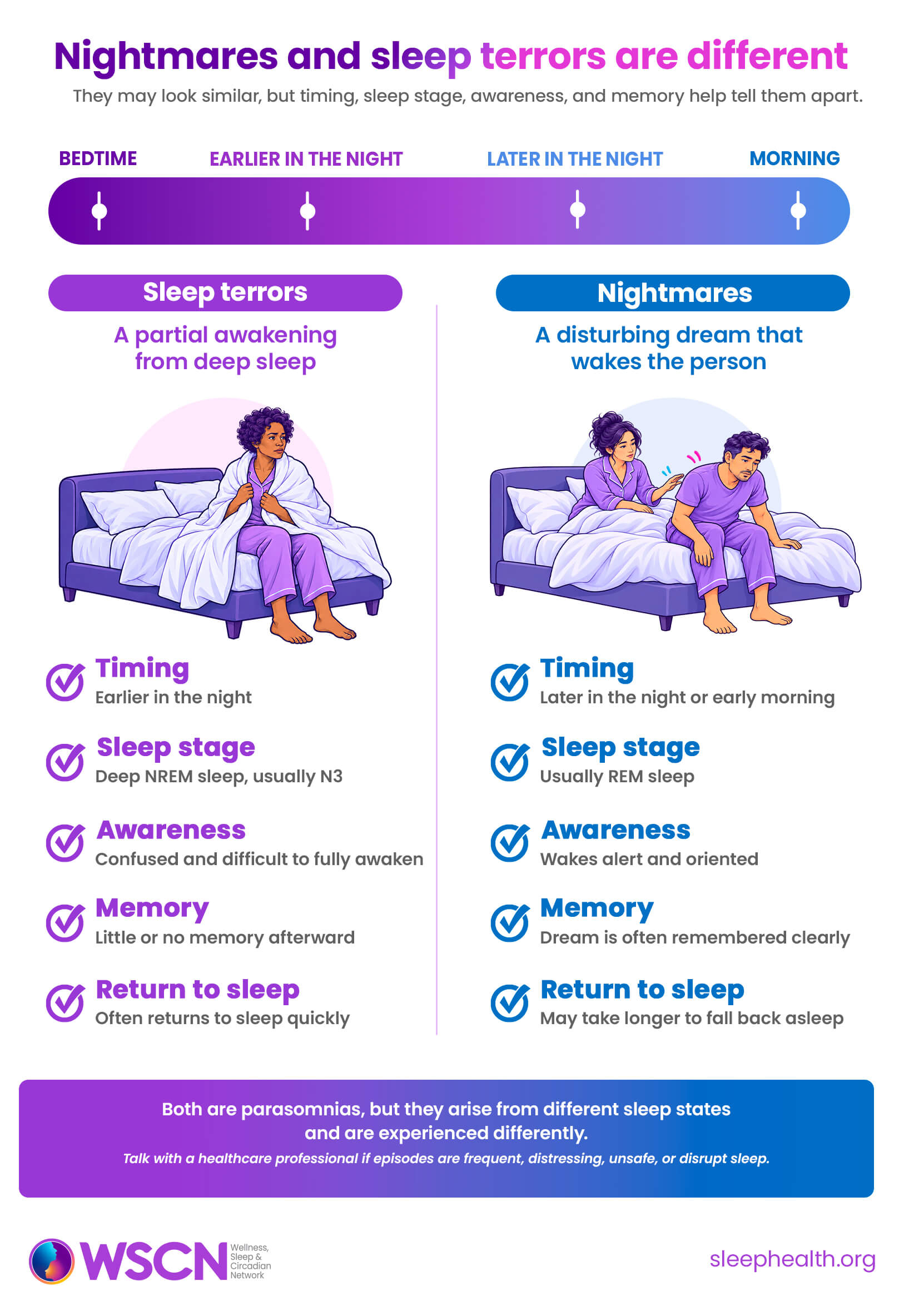
Nightmares are vivid, disturbing dreams that usually wake a person from sleep. They may involve fear, danger, helplessness, grief, anger, shame, or other intense emotions. After waking, the person is usually alert and can often describe the dream. Nightmare disorder is considered when nightmares are repeated and cause significant distress or impairment. This may include avoiding sleep, waking frequently, difficulty returning to sleep, daytime fatigue, mood changes, concentration problems, or fear that the nightmare will happen again.

Nightmare disorder is a type of parasomnia. Parasomnias are sleep disorders involving unwanted events, experiences, or behaviors during sleep. Nightmares are different from sleep terrors, and the distinction matters because evaluation and treatment may differ. Nightmares are usually associated with REM sleep, a stage of sleep when dreaming is common and the brain is active. They often happen later in the night/very early morning, when REM sleep periods tend to be longer. Nightmares may occur more frequently when sleep is fragmented, stress is high, or trauma-related symptoms are active.

Nightmare disorder is reported in a minority of adults, but estimates vary depending on how nightmares are defined. Frequent nightmares are more common in people with post-traumatic stress disorder, depression, anxiety, high stress, and some other psychiatric or medical conditions. Nightmares are more common in children, and persistent or highly distressing nightmares in children deserve evaluation. Read more about parasomnias in children here.
Signs and symptoms

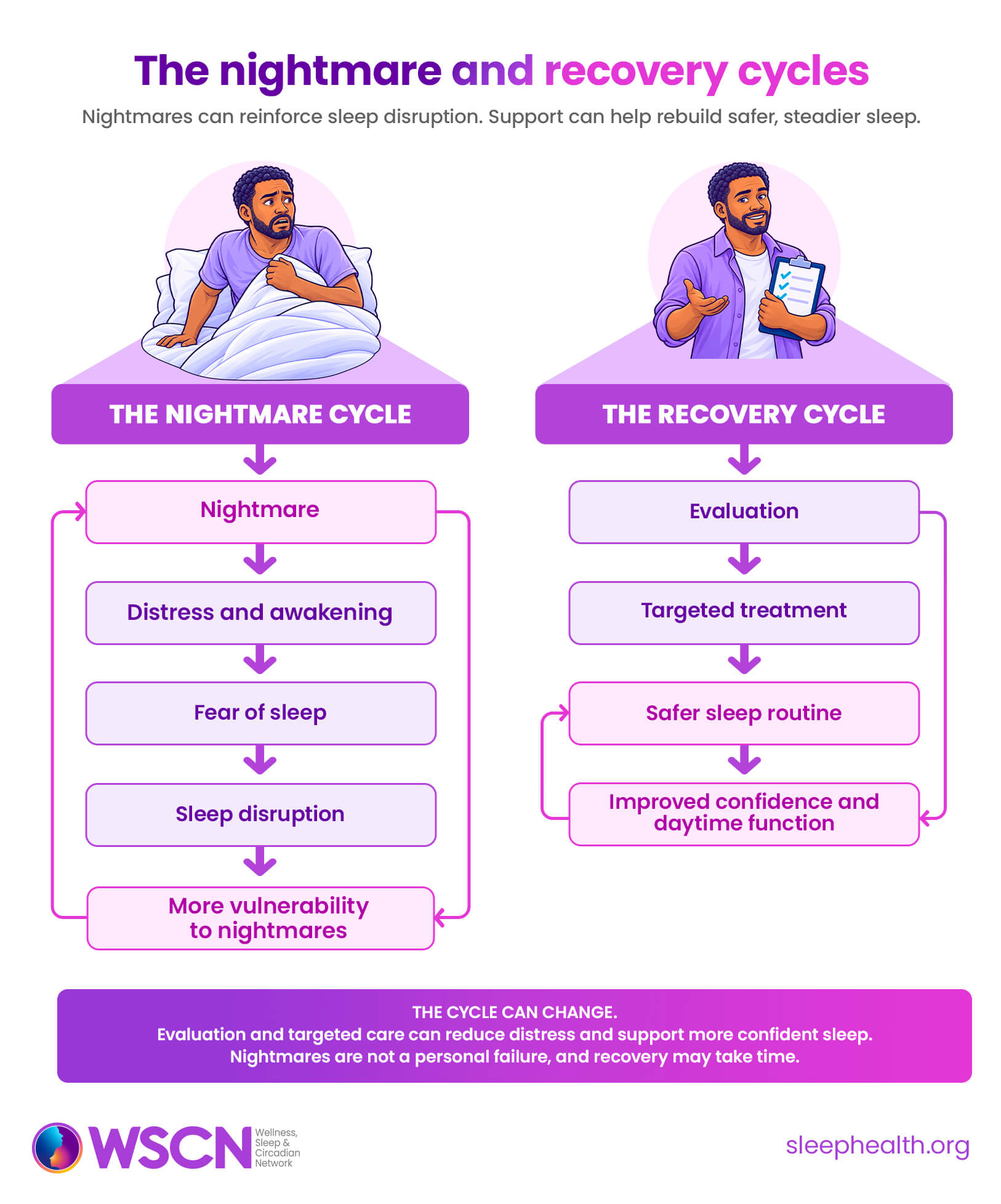
Nightmare disorder happens during sleep, but its effects can be felt for a time afterwards. A disturbing dream can lead to a sudden awakening, physical stress symptoms, emotional distress, and difficulty returning to sleep. When this pattern repeats, the person may begin to dread bedtime or spend the day worrying about sleep.

Nightmares can also affect circadian and daily routines. A person may delay bedtime, sleep at irregular times, use alcohol or other substances to fall asleep, or avoid sleep when feeling unsafe. These responses are understandable, but they may worsen sleep quality and make the 24-hour circadian rhythm less stable.

The whole-24-hours approach looks beyond the nighttime, and considers whole-person health. Caring for nightmare disorder may include understanding sleep timing, stress physiology, trauma symptoms, mental health, medications, evening routines, light exposure, substance use, and daytime supports. The goal is not simply fewer nightmares; it is safer nights, steadier days, and better quality of life.

Nighttime symptoms

A person may experience:

  • Repeated disturbing dreams that wake them from sleep
  • Clear memory of the dream after waking
  • Fear, sadness, anger, guilt, shame, or distress after the nightmare
  • Difficulty returning to sleep / insomnia
  • Avoiding sleep because of fear of another nightmare
  • Disrupted sleep for a bed partner or household member

Daytime symptoms

Daytime effects may include:

  • Fatigue or low energy
  • Sleepiness or dozing unintentionally
  • Irritability, anxiety, low mood, or emotional distress
  • Difficulty concentrating or remembering
  • Reduced work performance
  • Avoiding reminders of the dream or trauma-related content
  • Worry about bedtime or the next night’s sleep
  • Increased use of caffeine, alcohol, cannabis, or other substances to manage sleep or distress

Screening and diagnosis

Nightmare disorder is usually diagnosed through a clinical history. A clinician will ask about the dreams: how often they occur, when they happen, how the person feels after waking, and how symptoms affect daytime function.

Assessment may include:

  • Sleep and wake schedule
  • Nightmare frequency and distress
  • Whether dreams are trauma-related
  • Symptoms of PTSD, anxiety, depression, grief, or high stress
  • Insomnia symptoms
  • Medication and supplement review
  • Alcohol, cannabis, nicotine, caffeine, or other substance use
  • Symptoms suggesting another sleep disorder, such as sleep apnea, restless legs syndrome, REM sleep behavior disorder, or sleep terrors
  • Safety concerns, including drowsy driving or self-harm risk

A sleep study is not required for most straightforward nightmare disorder evaluations. It may be recommended if symptoms suggest another sleep disorder.

When to talk with a healthcare professional

A person does not need to know the name or exact nature of a condition before asking for help. If a person experiences any of the symptoms above, it is appropriate to discuss them with a healthcare professional. 

Red Flag: Seek urgent medical care if symptoms or sleep loss are affecting a person’s ability to drive or work safely, or is causing severe distress or thoughts of self-harm.

What to bring to a doctor’s visit

A primary care physician is a good place to start for a sleep disorder evaluation. They can conduct preliminary screenings and recommend next steps for diagnosis. It can be helpful to bring information to an initial visit: try using WSCN’s How to talk to your primary care clinician about sleep problems checklist.

Causes, risk factors and health implications

Causes and risk factors

The exact cause of nightmare disorders is unknown, but it can have multiple contributors.

  • Stress and trauma: Acute stress, traumatic experiences, PTSD, grief, and chronic threat or insecurity can increase nightmares.
  • Mental health factors: Depression, anxiety, panic symptoms, substance use disorders, and emotional distress may contribute.
  • Sleep disruption: Insomnia, irregular sleep timing, insufficient sleep, and fragmented sleep can make nightmares more likely or harder to recover from.
  • Medications and substances: Some medications and withdrawal from alcohol, sedatives, or other substances may trigger or worsen nightmares.
  • Medical and neurological factors: Pain, illness, fever, neurodegenerative conditions, and other health changes may be relevant in some adults.
  • Environmental factors: Unsafe sleep environments, nighttime noise, caregiving interruptions, or sleeping in a place associated with danger may increase distress.

These factors are not personal failures. Identifying them helps match the right care to the person’s needs.

Long-term health implications

Nightmares themselves are usually not harmful, unless a person acts out their dreams in ways that are unsafe for themselves or others. Still, repeated nightmares and sleep disruption deserve care because chronic sleep disruption can lead to long-term health issues. 

  • Mental health: Frequent nightmares are associated with higher distress and may worsen PTSD, depression, anxiety, and suicidal thinking in some people.
  • Sleep health: Nightmares can contribute to insomnia, sleep avoidance, fragmented sleep, and reduced confidence in sleep.
  • Stress-response systems: Repeated distress awakenings may activate stress physiology at night, especially when nightmares are frequent or trauma-related.
  • Cognition and safety: Poor sleep can affect attention, reaction time, memory, work performance, and driving safety.
  • Substance-related risks: Some people use alcohol, cannabis, or sedatives to manage sleep, which may worsen sleep quality or create additional health risks.
  • Relationships and quality of life: Nightmares can affect mood, intimacy, bed partner sleep, family routines, and participation in daily life.
Treatment and management

Treatment depends on many factors, particularly underlying causes and severity, but there are several potential treatments.

Nightmare-focused therapy

Imagery rehearsal therapy, often called IRT, is one of the best-known treatments for nightmare disorder in adults. In IRT, a person works while awake to change the storyline or ending of a recurring nightmare and rehearses the new version. The goal is not to deny what happened or force positive thinking. The goal is to reduce the nightmare’s power and build a safer sleep experience. Other psychological treatments may include cognitive behavioral therapy for nightmares, exposure-relaxation-rescripting therapy, trauma-focused therapy when appropriate, and treatment for coexisting insomnia or PTSD.

Medication

Medication may be considered for some adults, especially when nightmares are associated with PTSD or severe distress. Prazosin has been studied for PTSD-related nightmares, but recommendations have varied across guidelines and populations. Medication decisions should be individualized and discussed with a qualified clinician, including potential benefits and side effects.

Treating related conditions

Nightmares may improve when related conditions are treated. This may include care for PTSD, depression, anxiety, insomnia, sleep apnea, pain, medication effects, or substance use. People should not stop or change prescribed medications without medical guidance.

Living with nightmare disorder

Living with nightmare disorder can feel isolating, especially when dreams are frightening, shame-filled, or connected to trauma. Support and treatment can help. Practical supports may include a calming bedtime routine, a plan for what to do after waking, a safe and comfortable sleep environment, and clear communication with a bed partner or support person. These steps do not replace treatment, but they may reduce fear and help the person feel less alone.

Research and what we are still learning

Researchers are studying which nightmare treatments work best for different groups of adults, including people with PTSD, mental health conditions, other sleep disorders, or high stress. There is also growing interest in how nightmare treatment affects daytime outcomes such as mood, safety, relationships, and quality of life.

More research is needed on personalized treatment, digital delivery of nightmare therapies, combined treatment for nightmares and insomnia, and how to support people who have difficulty using mental imagery.

References

Aurora, R. N., Zak, R. S., Auerbach, S. H., et al. (2010). Best practice guide for the treatment of nightmare disorder in adults. Journal of Clinical Sleep Medicine, 6(4), 389–401. https://pmc.ncbi.nlm.nih.gov/articles/PMC2919672/

Casement, M. D., & Swanson, L. M. (2012). A meta-analysis of imagery rehearsal for post-trauma nightmares: Effects on nightmare frequency, sleep quality, and posttraumatic stress. Clinical Psychology Review, 32(6), 566–574. https://doi.org/10.1016/j.cpr.2012.06.002

Hansen, K., Höfling, V., Kröner-Borowik, T., et al. (2013). Efficacy of psychological interventions aiming to reduce chronic nightmares: A meta-analysis. Clinical Psychology Review, 33(1), 146–155. https://doi.org/10.1016/j.cpr.2012.10.012

Morgenthaler, T. I., Auerbach, S., Casey, K. R., et al. (2018). Position paper for the treatment of nightmare disorder in adults: An American Academy of Sleep Medicine position paper. Journal of Clinical Sleep Medicine, 14(6), 1041–1055. https://doi.org/10.5664/jcsm.7178

Seda, G., Sanchez-Ortuno, M. M., Welsh, C. H., et al. (2015). Comparative meta-analysis of prazosin and imagery rehearsal therapy for nightmare frequency, sleep quality, and posttraumatic stress. Journal of Clinical Sleep Medicine, 11(1), 11–22. https://pubmed.ncbi.nlm.nih.gov/25325592/

Talbot, L. S., Maguen, S., Metzler, T. J., et al. (2014). Cognitive behavioral therapy for insomnia in posttraumatic stress disorder: A randomized controlled trial. Sleep, 37(2), 327–341. https://doi.org/10.5665/sleep.3408

Talbot, L. S., Hairston, I. S., Eidelman, P., et al. (2024). An expert consensus statement for implementing cognitive behavioral therapy for nightmares in adults. Behavioral Sleep Medicine. https://doi.org/10.1080/15402002.2024.2437634


Medical disclaimer
This article is for educational purposes only and is not intended to replace professional medical advice, diagnosis, or treatment. Speak with a qualified healthcare professional about questions or concerns related to your sleep. Read full medical disclaimer

Related pages