
Sleep Problems & Disorders

Idiopathic Hypersomnia

Idiopathic hypersomnia is a sleep-wake disorder that causes persistent daytime sleepiness, even when a person has had enough time to sleep. Some adults with idiopathic hypersomnia sleep for a long time at night, have difficulty waking, feel confused or groggy after sleep, or take naps that do not feel refreshing.

The word idiopathic means that the cause is not yet fully understood. The symptoms are real, and they can affect the whole 24 hours: waking up, working, driving, relationships, mood, routines, and health. A careful sleep evaluation can help clarify what is happening and identify treatment and support options.

Overview

  • Idiopathic hypersomnia is a central disorder of hypersomnolence, meaning the main symptom is an ongoing difficulty staying awake and alert
  • Adults with idiopathic hypersomnia may sleep long hours, struggle to wake, and still feel sleepy during the day
  • Naps may be long but often do not restore alertness
  • Diagnosis requires ruling out insufficient sleep, sleep apnea, narcolepsy, medication effects, medical conditions, and mental health contributors
  • Treatment often focuses on improving alertness, safety, daily function, and quality of life, supported by targeted medications
  • Idiopathic hypersomnia is not caused by laziness, poor motivation, or lack of effort – it is a neurological sleep disorder

About idiopathic hypersomnia

Idiopathic hypersomnia, often shortened to IH, is a neurological sleep-wake disorder in which a person has chronic excessive daytime sleepiness that is not explained by another condition. It is grouped with the central disorders of hypersomnolence, which also include narcolepsy and Kleine-Levin Syndrome.

In idiopathic hypersomnia, the problem is not a lack of sleep leading to daytime sleepiness. Many adults with IH have adequate or long sleep time and still feel unable to stay fully awake and alert. Some experience sleep inertia, which means difficulty transitioning from sleep to wakefulness. Severe sleep inertia is sometimes described as “sleep drunkenness,” because a person may wake feeling confused, slow, foggy, disoriented, or unable to function normally.

Idiopathic hypersomnia is uncommon and is likely under-recognized. Symptoms often begin in adolescence or young adulthood, but many people are not diagnosed until years later. Diagnosis can be delayed because the symptoms may be mistaken for depression, burnout, insufficient sleep, medication effects, or poor habits. 
Signs and symptoms

Idiopathic hypersomnia can look different from person to person. Symptoms may fluctuate, but they are usually persistent and disruptive. Like all sleep disorders, IH doesn’t just affect sleep, it affects the entire 24-hour day.

The morning may begin with difficulty waking, missed alarms, or a long period of impaired functioning. During the day, sleepiness and brain fog can affect attention, work performance, memory, social connection, and driving safety. Naps may take up large parts of the day without restoring alertness. By evening, the person may be trying to catch up on responsibilities that sleepiness made difficult earlier.

This 24-hour pattern can affect relationships, employment, education, caregiving, exercise, meal routines, and mental health. For many people, diagnosis brings relief because it gives a name to symptoms that may have been misunderstood for years.

The goal of care is to both reduce sleepiness and also help the person function more safely and consistently across the full day.

Sleep and waking symptoms

A person may notice:

  • Sleeping longer than expected at night
  • Needing multiple alarms or help from another person to wake
  • Feeling confused, heavy, foggy, or unwell after waking
  • Long sleep and naps that do not feel refreshing

Daytime symptoms

Daytime effects may include:

  • Strong sleepiness during work, school, reading, meetings and conversations
  • Brain fog, slowed thinking, or memory difficulty
  • Reduced motivation or productivity
  • Irritability, low mood, or anxiety related to symptoms
  • Headaches, dizziness, or cold hands and feet in some people
  • Concern about driving, work errors, or safety-sensitive tasks

It is helpful to distinguish sleepiness from fatigue. Sleepiness means a tendency to doze or fall asleep. Fatigue means low energy or reduced capacity, even without falling asleep. Adults with idiopathic hypersomnia may experience both, but excessive sleepiness is central to the diagnosis.

Screening and diagnosis

There is no single symptom that confirms idiopathic hypersomnia. Diagnosis requires a careful clinical evaluation and testing to rule out other causes of sleepiness.

Diagnostic tools and tests

The doctor may use the following tools to help rule out other sleep disorders and diagnose idiopathic hypersomnia:

  • A sleep diary for one to two weeks
  • Actigraphy, a wrist-worn monitor that measures sleep, rest and activity 
  • Overnight polysomnography, also called a sleep study
  • A Multiple Sleep Latency Test, or MSLT, which measures how quickly a person falls asleep during scheduled nap opportunities
  • Bloodwork or other tests when medical contributors are suspected

A diagnosis is usually considered only after ruling out insufficient sleep, obstructive sleep apnea, narcolepsy, circadian rhythm sleep-wake disorders, medication effects, substance effects, and medical or mental health conditions that could better explain the symptoms.

When to talk with a healthcare professional

A person does not need to know the name or exact nature of a condition before asking for help. If a person experiences any of the symptoms above, it is appropriate to discuss them with a healthcare professional. 

Red Flag (Icon): Seek urgent medical care if symptoms or sleep loss are affecting a person’s ability to drive or work safely, or is causing severe distress or thoughts of self-harm.

What to bring to a doctor’s visit

A primary care physician is a good place to start for a sleep disorder evaluation. They can conduct preliminary screenings and recommend next steps for diagnosis. It can be helpful to bring information to an initial visit: try using WSCN’s How to talk to your primary care clinician about sleep problems checklist.

Causes, risk factors and health implications

Causes and risk factors

The cause of idiopathic hypersomnia is not yet known. Current research suggests that IH may involve brain systems that regulate sleep and wakefulness, but no single cause explains all cases.

Possible contributors or associated factors include:

  • Biological differences in sleep-wake regulation
  • Family history of hypersomnia symptoms
  • Prior infection or immune-related triggers
  • Coexisting sleep, medical, neurological, or mental health conditions
  • Some medications or substances
  • Irregular schedules or insufficient sleep, which can worsen symptoms 

These factors are not personal failures. Identifying them helps clinicians separate idiopathic hypersomnia from other causes of sleepiness and build a more useful care plan.

Long-term health implications

Untreated or poorly managed idiopathic hypersomnia can affect health and daily life over time.

  • Safety: Ongoing sleepiness may increase risk during driving, operating equipment, or safety-sensitive work.
  • Mental health: Persistent symptoms can contribute to depression, anxiety, isolation, frustration, and reduced self-confidence.
  • Work, school, and finances: Sleepiness, brain fog, and unreliable waking may affect attendance, performance, income, and job stability.
  • Relationships and social health: People may miss events, withdraw socially, or be misunderstood by family, friends, or employers.
  • Physical health routines: Severe sleepiness can make it harder to maintain exercise, meal planning, medical appointments, and other health-supporting routines.
  • Cardiometabolic health: Direct long-term cardiometabolic risks specific to idiopathic hypersomnia are still being studied. However, disrupted daily function and reduced activity can potentially affect whole-body health.

Treatment and management

Medication treatment

The American Academy of Sleep Medicine recommends the medication modafinil for adults with idiopathic hypersomnia and suggests several other medications in selected cases, including clarithromycin, methylphenidate, pitolisant, and sodium oxybate. Medication decisions should consider benefits, side effects, pregnancy considerations, drug interactions, driving safety, cost, access, and other health conditions.

Non-medication supports

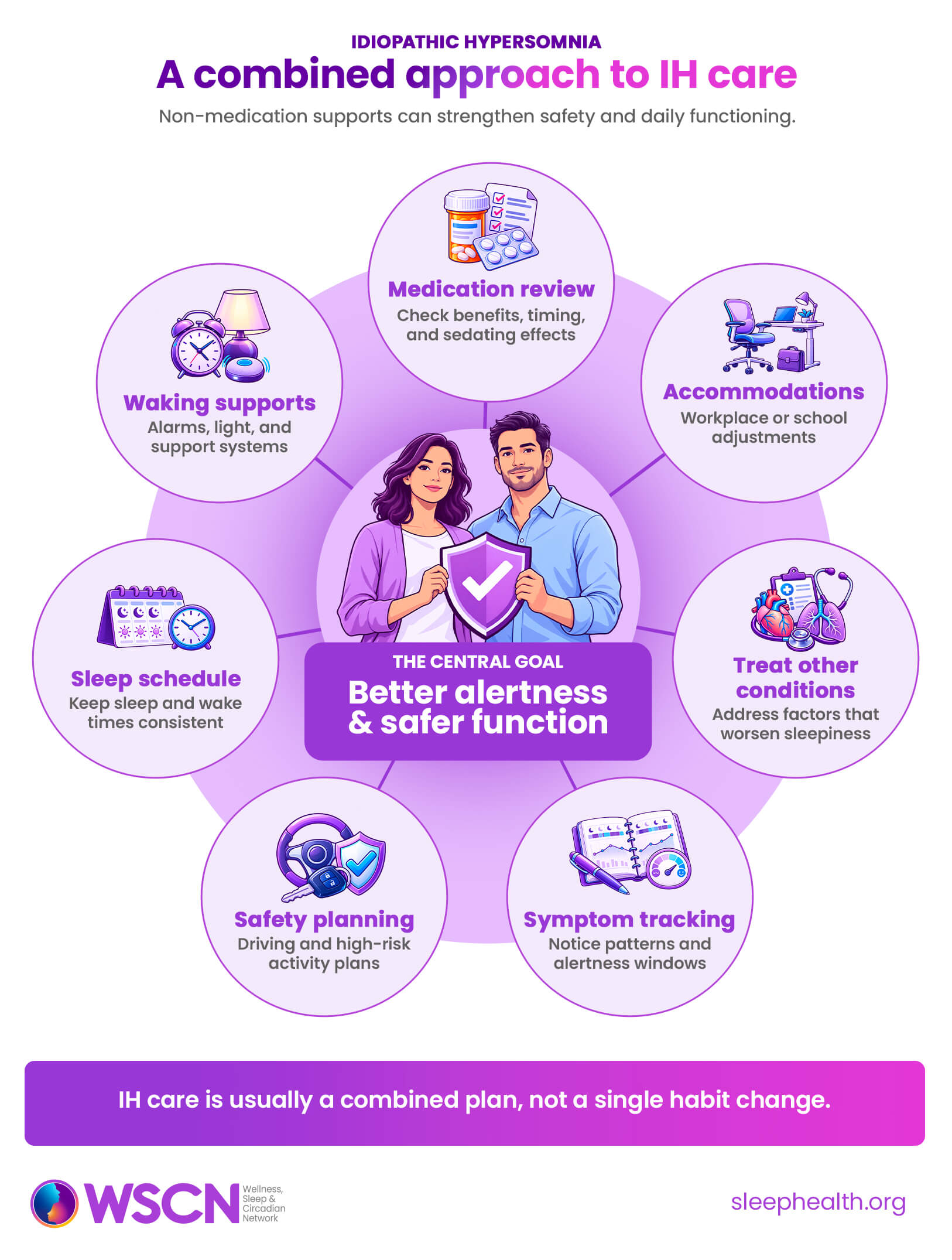
Non-medication strategies do not cure idiopathic hypersomnia, but they can support safety and daily functioning. The goal is to take ownership of all 24 hours to optimize wellbeing. Strategies may include:

  • Keeping a consistent sleep-wake schedule when possible
  • Planning the most demanding tasks during alertness windows
  • Using alarms, light, or support systems for waking
  • Avoiding alcohol or sedating medications 
  • Treating other sleep disorders or medical conditions that worsen sleepiness
  • Making a driving safety plan
  • Discussing workplace or school accommodations
  • Remembering IH is a real neurological disorder, not a personal failure

Naps help some people manage the day, but in IH they are often long and not refreshing. Nap planning should be individualized.
Research and what we are still learning

Researchers are still working to understand what causes idiopathic hypersomnia, why symptoms vary, and which treatments work best for which people. Current research includes studies of brain wake-promoting systems, patient-reported outcomes, quality of life, diagnostic testing, and new medications.

This research matters because idiopathic hypersomnia can be disabling, and current tests do not always capture the full experience of the disorder. Better measures may help shorten diagnosis delays and improve treatment choices.

References
  1. Ambati, A., Hillary, R. P., Leu-Semenescu, S., et al. (2021). Kleine-Levin syndrome is associated with birth difficulties and genetic variants in the TRANK1 gene loci. Proceedings of the National Academy of Sciences, 118(12), e2005753118. https://doi.org/10.1073/pnas.2005753118
  2. Bassetti, C. L. A., Kallweit, U., Vignatelli, L., et al. (2021). European guideline and expert statements on the management of narcolepsy in adults and children. Journal of Sleep Research, 30(6), e13387. https://doi.org/10.1111/jsr.13387
  3. Dauvilliers, Y., Arnulf, I., Foldvary-Schaefer, N., et al. (2022). Safety and efficacy of lower-sodium oxybate in adults with idiopathic hypersomnia: A phase 3, placebo-controlled, double-blind, randomised withdrawal study. The Lancet Neurology, 21(1), 53–65. https://doi.org/10.1016/S1474-4422(21)00368-9
  4. De Pieri, M., Castelnovo, A., Miano, S., & Manconi, M. (2025). The diagnostic and therapeutic value of time in bed extension in insufficient sleep syndrome. Sleep Medicine, 128, 219–228. https://doi.org/10.1016/j.sleep.2025.02.013
  5. Inoue, Y., Tabata, T., Tsunematsu, T., & Hirata, K. (2021). Efficacy and safety of modafinil in patients with idiopathic hypersomnia without long sleep time: A multicenter, randomized, double-blind, placebo-controlled, parallel-group comparison study. Sleep Medicine, 80, 315–321. https://doi.org/10.1016/j.sleep.2021.01.018
  6. Maski, K., Trotti, L. M., Kotagal, S., et al. (2021). Treatment of central disorders of hypersomnolence: An American Academy of Sleep Medicine clinical practice guideline. Journal of Clinical Sleep Medicine, 17(9), 1881–1893. https://doi.org/10.5664/jcsm.9328
  7. Plazzi, G., Ruoff, C., Lecendreux, M., et al. (2018). Treatment of paediatric narcolepsy with sodium oxybate: A double-blind, placebo-controlled, randomised-withdrawal multicentre study and open-label investigation. The Lancet Child & Adolescent Health, 2(7), 483–494. https://doi.org/10.1016/S2352-4642(18)30133-0

Medical disclaimer
This article is for educational purposes only and is not intended to replace professional medical advice, diagnosis, or treatment. Speak with a qualified healthcare professional about questions or concerns related to your sleep. Read full medical disclaimer

Explore related topics