
Sleep Problems & Disorders
Assessing and diagnosing sleep disorders
Screening tools
These screening and information gathering tools can help differentiate among sleep disorders and determine the need for further testing.
Clinical evaluation
Visit a primary care physician or sleep specialist to discuss symptoms and next steps. A clinician will review symptoms, sleep timing, daytime function, medical and mental health history, medications, substances, work or school schedules, and family observations. A physical examination may look for airway, neurologic, cardiovascular, or other relevant findings, because sometimes health conditions can cause sleep disorders. The opposite is also true – some sleep disorders can influence health outcomes. A physician will ask questions to join these dots and bridge the gap between day and night.
Because many sleep disorders have overlapping symptoms, it can help to bring along prepared information on:
- Symptoms a person is experiencing, including both nighttime and daytime effects
- Symptom onset (when it first happened), frequency (how often it happens), timing (when it happens), duration (how long the symptom lasts), and severity (how bad it is)
- Other diagnosed medical conditions and medications
- A person’s use of caffeine, alcohol, nicotine, marajuana, or other substances
- Any family history of sleep disorders or other medical conditions
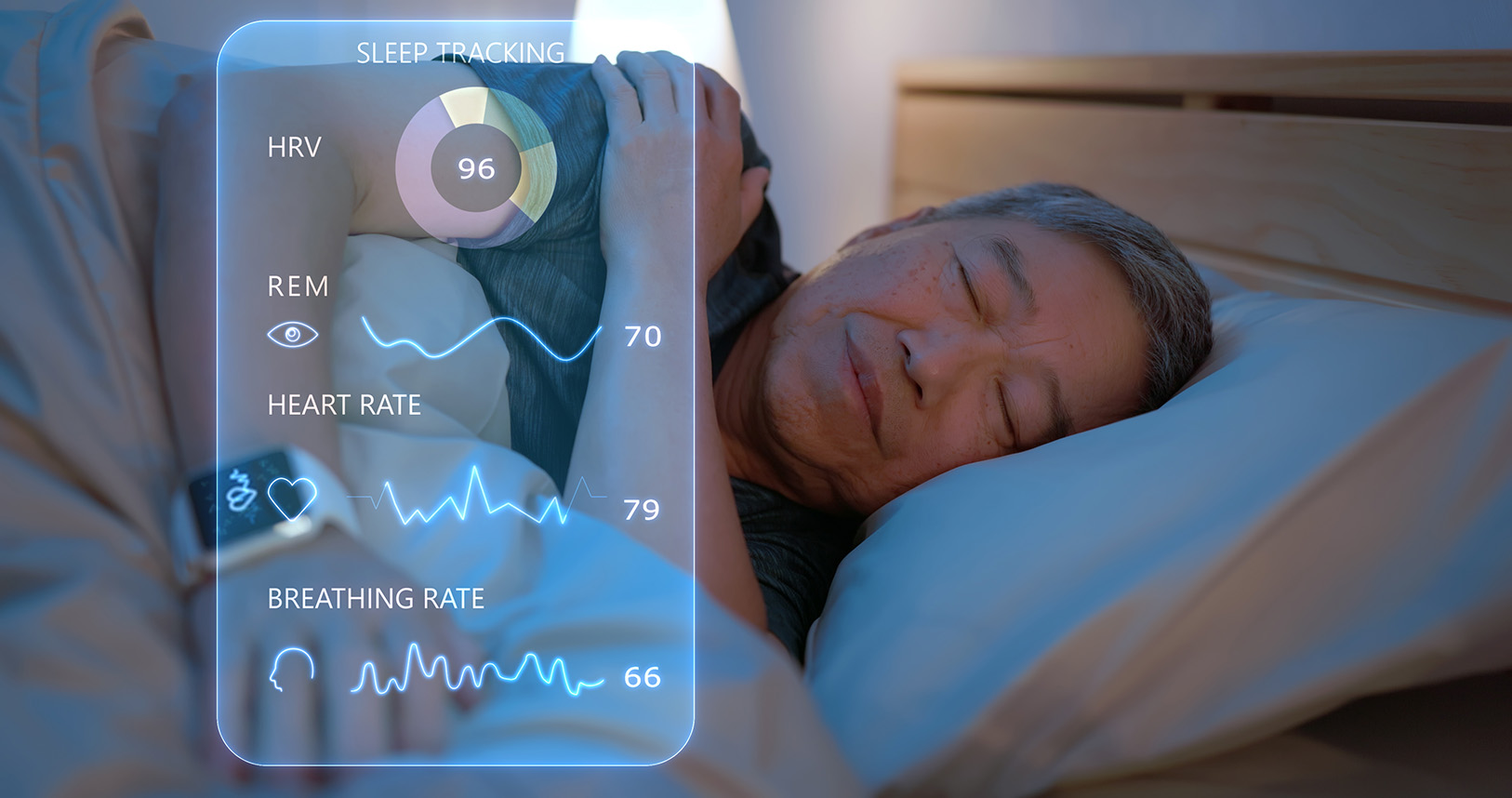
- Any data available from wearable devices such as a smart watch or sleep ring

Questionnaires
In addition to taking a history and performing a physical exam, the clinician may ask a person to
complete validated sleep questionnaires during the visit. A validated questionnaire is a survey that has been tested by scientists to prove that it accurately measures a condition. These questionnaires can screen to see if further testing is warranted, and help measure symptom severity.
There are many validated questionnaires used to screen for sleep disorders. A few of the most common are:
- Epworth Sleepiness Scale (ESS) — measures excessive daytime sleepiness
- Insomnia Severity Index (ISI) — measures insomnia severity
- STOP-Bang — measures risk-factors for obstructive sleep apnea
- Pittsburgh Sleep Quality Index (PSQI) — measures broad sleep quality
- BEARS — broad pediatric screening measuring Bedtime problems, Excessive daytime sleepiness, Awakenings, sleep Regularity and duration, and Snoring
- Pediatric Sleep Questionnaire—Sleep-Related Breathing Disorder (PSQ-SRBD) — measures pediatric sleep-disordered breathing
- Morningness–Eveningness Questionnaire (MEQ) — measures circadian timing and chronotype
- REM Sleep Behavior Disorder Screening Questionnaire (RBDSQ) — suspected REM sleep behavior disorder
Sleep diary
A sleep diary is a record kept over one or more weeks that shows the timing and duration of sleep, nighttime symptoms, awakenings, naps, and daytime symptoms. It is intended to track day to day variations in symptoms and establish a pattern that can be evaluated against the patterns of various sleep disorders. The clinician will often provide a worksheet or template to record the information.

Actigraphy
Actigraphy refers to gathering biometric data from a wrist-worn clinical device similar to a smart watch. The device records rest and activity patterns over days or weeks to build a picture of a person’s lifestyle and sleep patterns. It can capture the amount of sleep, time to fall asleep, time spent in bed, and sleep efficiency of a person. Actigraphy can be useful for monitoring circadian rhythm concerns, insomnia evaluation, hypersomnolence disorders, and insufficient sleep syndrome.
Diagnostic tests
Based on what the medical history, physical exam, questionnaires, actigraphy, and/or sleep diary show, the physician will recommend tests that can help provide a diagnosis. In some cases, a sleep disorder is diagnosed by ruling out other possible causes of a person’s symptoms.
Sleep study
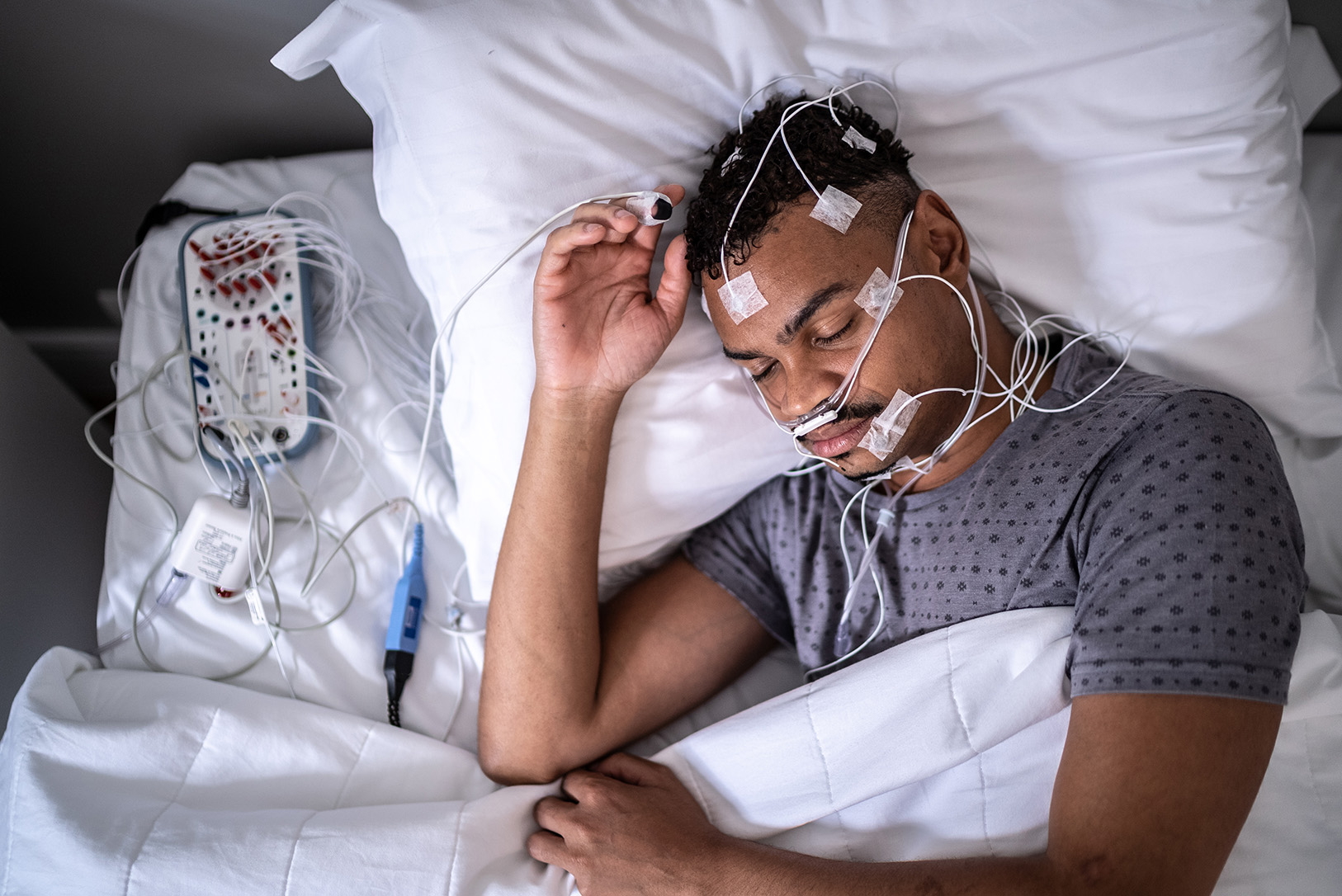
An overnight sleep study, also called polysomnography, is performed at a sleep center. During the study a person is connected to several different types of leads that record biometric data. The various instruments record brain activity, sleep phases, eye movements, muscle activity, heart rhythm, airflow, breathing effort, blood oxygen saturation, carbon dioxide expiration, and other signals. It can help identify sleep apnea, movement disorders, unusual behaviors, and sleep-stage patterns.
Home sleep apnea test
Selected adults with suspected obstructive sleep apnea may be able to use a simplified sleep apnea test at home, instead of having to go to a sleep center for a full sleep study. Eligibility is usually determined by a physician’s evaluation and insurance requirements. A home sleep apnea test measures airflow, breathing effort, blood oxygen saturation, heart rate, and sometimes body position or snoring.
A home sleep apnea test can only test for sleep apnea, and does not evaluate other sleep disorders. Sometimes this test will need to be followed up with a sleep study at a sleep center. Other times it will be followed by a titration study, which is used to determine appropriate air pressure for a PAP device (commonly known as CPAP).
Multiple sleep latency test (MSLT)
The multiple sleep latency test (MSLT) is generally used when narcolepsy or idiopathic hypersomnia is suspected. The test measures how quickly someone falls asleep during scheduled daytime naps, and whether rapid eye movement sleep appears unusually early. It is usually conducted the day after a sleep study is performed.
Other Tests
Depending on the suspected sleep disorder, a clinician may request blood tests, carbon dioxide monitoring, heart or lung testing, imaging, genetic testing, or referral to another specialist. Results from all screenings and diagnostic tests should be interpreted together with a person’s individual symptoms and goals.
American Academy of Sleep Medicine. (2023). *International classification of sleep disorders* (3rd ed., text rev.). https://aasm.org/clinical-resources/international-classification-sleep-disorders/
Kapur, V. K., Auckley, D. H., Chowdhuri, S., et al. (2017). Clinical practice guideline for diagnostic testing for adult obstructive sleep apnea: An American Academy of Sleep Medicine clinical practice guideline. *Journal of Clinical Sleep Medicine, 13*(3), 479–504. https://doi.org/10.5664/jcsm.6506
Krahn, L. E., Arand, D. L., Avidan, A. Y., et al. (2021). Recommended protocols for the Multiple Sleep Latency Test and Maintenance of Wakefulness Test in adults: Guidance from the American Academy of Sleep Medicine. *Journal of Clinical Sleep Medicine, 17*(12), 2489–2498. https://doi.org/10.5664/jcsm.9620
Marcus, C. L., Moore, R. H., Rosen, C. L., et al. (2013). A randomized trial of adenotonsillectomy for childhood sleep apnea. *New England Journal of Medicine, 368*(25), 2366–2376. https://doi.org/10.1056/NEJMoa1215881
Maski, K., Trotti, L. M., Kotagal, S., et al. (2024). Recommended protocols for the Multiple Sleep Latency Test and Maintenance of Wakefulness Test in children: Guidance from the American Academy of Sleep Medicine. *Journal of Clinical Sleep Medicine, 20*(3), 469–484. https://pubmed.ncbi.nlm.nih.gov/38149645/
Smith, M. T., McCrae, C. S., Cheung, J., et al. (2018). Use of actigraphy for the evaluation of sleep disorders and circadian rhythm sleep-wake disorders: An American Academy of Sleep Medicine clinical practice guideline. *Journal of Clinical Sleep Medicine, 14*(7), 1231–1237. https://doi.org/10.5664/jcsm.7230