
Sleep Problems & Disorders
Restless Legs Syndrome
Restless legs syndrome, or RLS, is a sleep-related movement disorder that causes a strong urge to move the legs, usually with uncomfortable sensations that are worse during rest and in the evening or night. Moving, stretching, or walking often brings temporary relief.
RLS is real, common, and often treatable. Because symptoms can disrupt sleep and negatively affect daytime function, evaluation can help identify next steps and reduce the burden across the whole 24 hours.
Overview
- Restless legs syndrome causes an urge to move the legs, often with sensations described as crawling, pulling, aching, tingling, or burning
- Symptoms usually begin or worsen when a person is resting, sitting, or lying down, and are usually worse in the evening/night
- Movement often improves symptoms for a short time
- RLS can make it difficult to fall asleep, stay asleep, travel, sit through meetings, relax in the evening, or share a bed comfortably
- Low iron levels, pregnancy, kidney disease, some medications, untreated sleep apnea, and family history may contribute to RLS
- Treatment may include checking iron status, addressing triggers, treating related conditions, behavioral strategies, and medication when appropriate
About restless legs syndrome
Restless legs syndrome is also called RLS or Willis-Ekbom Disease. It is classified as a sleep-related movement disorder because symptoms often appear when a person is trying to rest or fall asleep.
RLS is diagnosed mainly from a person’s symptom history. There is not one single test that proves someone has RLS. Instead, a healthcare professional looks for a pattern: an urge to move the legs, symptoms that worsen during rest, relief with movement, and symptoms that happen mostly in the evening or night. The clinician also checks whether another condition could better explain the symptoms, such as leg cramps, nerve pain, arthritis, swelling, positional discomfort, or medication effects.
RLS can affect people of any age, but it becomes more common with age and is reported more often by women than men. Some people have symptoms for many years before getting the right explanation, partly because the sensations can be difficult to describe and may be mistaken for stress, other conditions, or “just restlessness.”
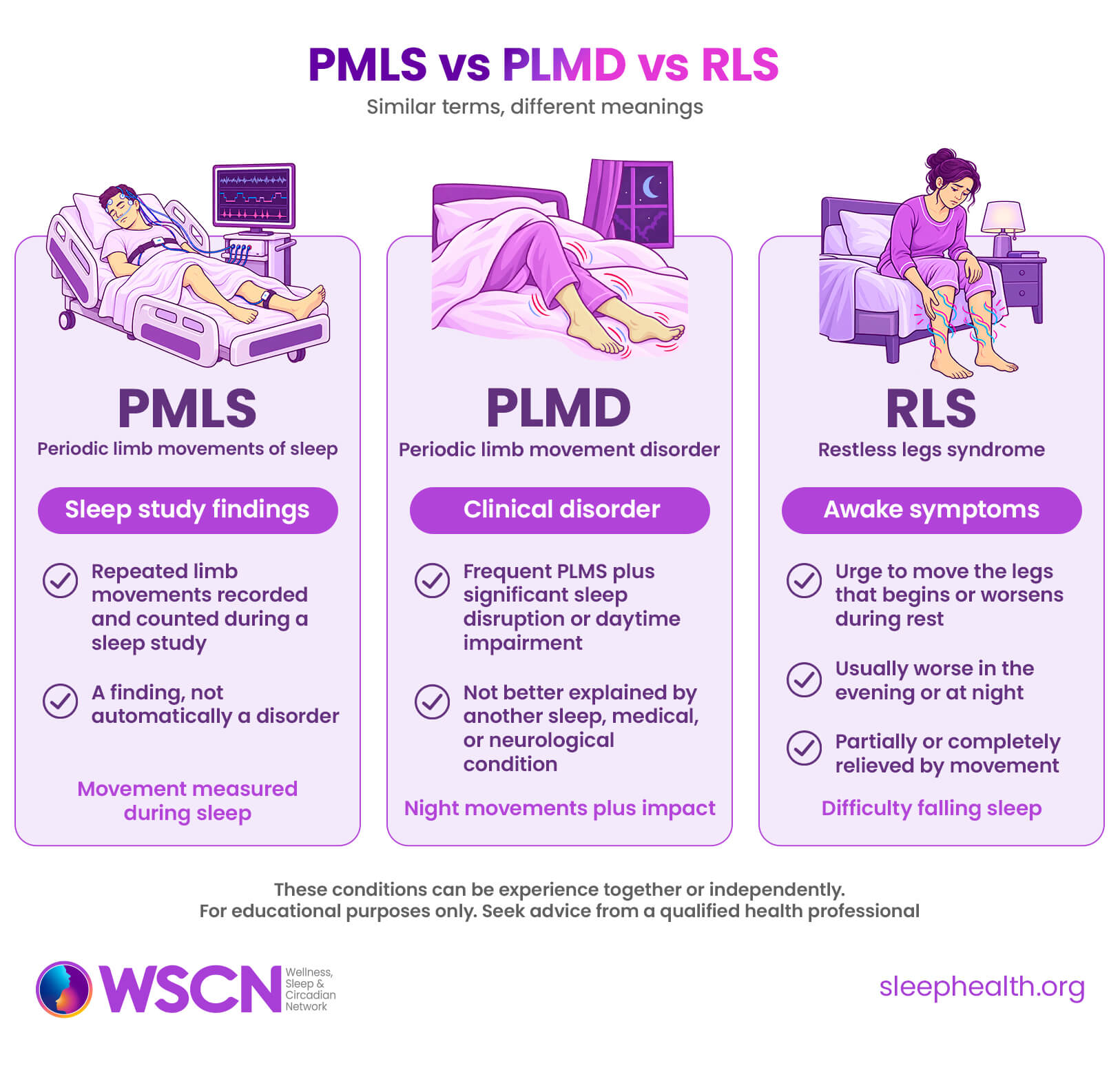
Many people with RLS also have periodic limb movements during sleep, which are repeated leg movements that happen while asleep. These movements are not the same as RLS, and a person can have one without the other. A sleep study may identify periodic limb movements, but RLS itself is usually diagnosed from the person’s awake symptoms and medical history.
Signs and symptoms
RLS is often most noticeable at night, but it affects the entire 24-hour day. When the body cannot settle in the evening, sleep can become shorter, lighter, and more fragmented. The next day, a person may feel tired, less focused, and less able to manage daytime activities and responsibilities.
Likewise, actions people take throughout the day impact sleep – diet, exercise, alcohol, caffeine, medications, and stress can all affect how people sleep. A whole-24-hours approach looks at how people can promote health and well-being during both the day and the night, so that people can find opportunities to thrive and be well.
Nighttime and rest-related symptoms
Common evening and nighttime RLS symptoms include:
- A strong urge to move the legs
- Uncomfortable sensations deep in the legs
- People describe crawling, pulling, itching, tingling, aches, throbbing, or burning
- Symptoms that begin or worsen when sitting, lying down, or trying to sleep
- Temporary relief with walking, stretching, rubbing, or moving the legs
- Symptoms that are strongest in the evening or at night
- Difficulty falling asleep or returning to sleep after waking due to the urge to move
- Sometimes affects arms and other body regions if severe
Daytime symptoms
RLS can affect the daytime, especially when it disrupts sleep or makes sitting still difficult. People may notice:
- Fatigue or sleepiness
- Reduced focus or mental clarity
- Irritability, low mood, or anxiety about bedtime
- Trouble sitting for long periods due to discomfort
- Reduced quality of life
- Bed partner disruption, especially if leg movements occur in bed
RLS can be mild, moderate, or severe; it can also be occasional or frequent. Symptoms may flare up during periods of stress, illness, low iron, pregnancy, medication changes, disrupted sleep, hot sleeping conditions, or untreated sleep apnea.
Screening and diagnosis
A healthcare professional may evaluate a person for RLS when they report an urge to move the legs that is worse at rest and at night, especially when symptoms disturb sleep or daily life.
Evaluation may include:
- Symptom history, including timing, triggers, and relief with movement
- Review of medications and supplements
- Medical history, including kidney disease, pregnancy, neuropathy, anemia, and sleep disorders
- Blood tests to assess iron status, often including ferritin and transferrin saturation
- Screening for other sleep disorders, including obstructive sleep apnea
- Sleep study when another sleep disorder is suspected, or when periodic limb movement disorder needs evaluation
When to talk with a healthcare professional
A person does not need to know the name or exact nature of a condition before asking for help. If a person experiences any of the symptoms above, it is appropriate to discuss them with a healthcare professional.
Red Flag: Seek urgent medical care if symptoms or sleep loss are affecting a person’s ability to drive or work safely, or is causing severe distress or thoughts of self-harm.
What to bring to a doctor’s visit
A primary care physician is a good place to start for a sleep disorder evaluation. They can conduct preliminary screenings and recommend next steps for diagnosis. It can be helpful to bring information to an initial visit: try using WSCN’s How to talk to your primary care clinician about sleep problems checklist.
Causes, risk factors and health implications
Causes and Risk Factors
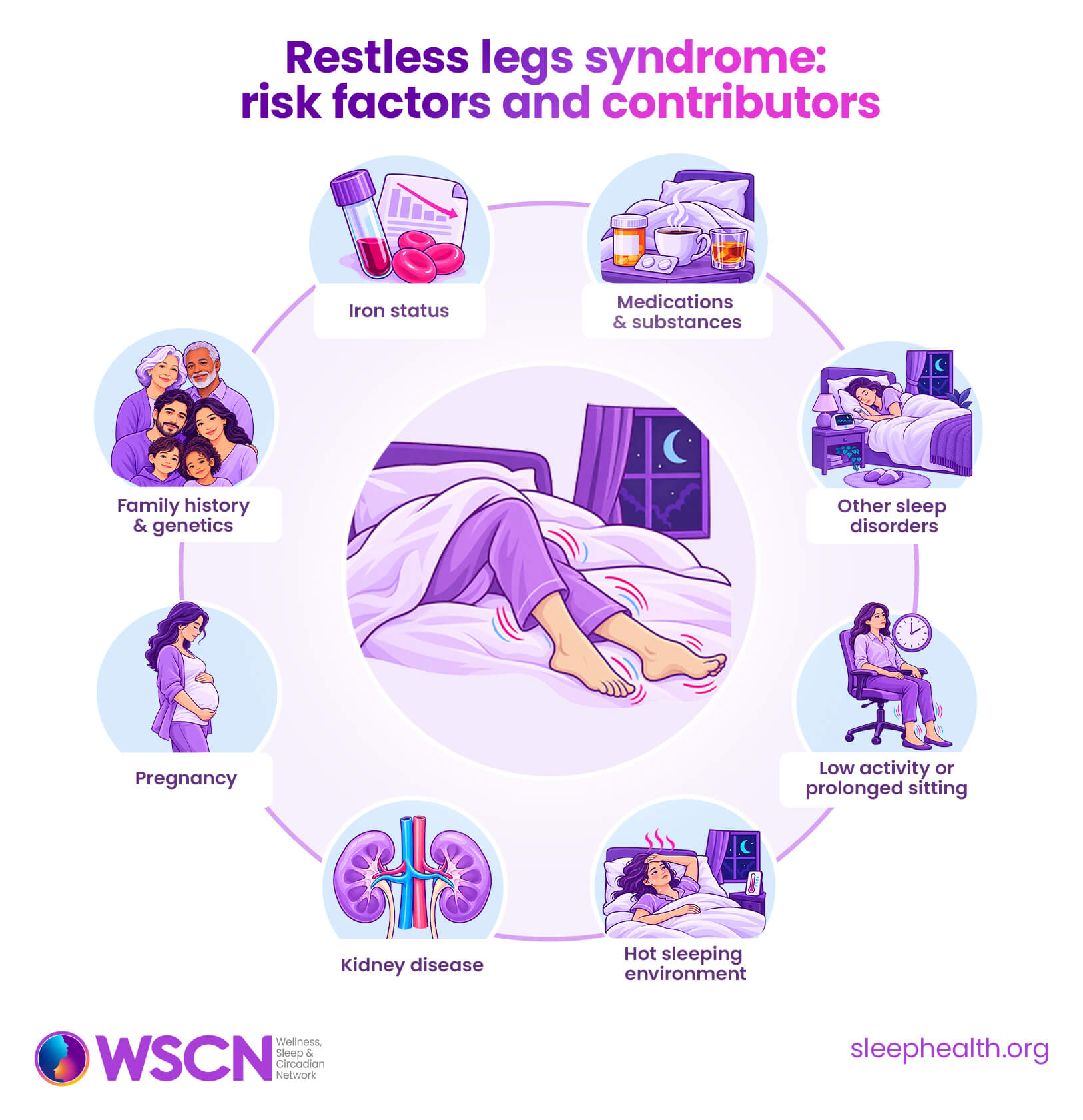
RLS can have more than one contributing cause, and for many people the cause is not fully clear. Common risk factors and contributors include:
Iron status: Low or low-normal iron stores can contribute to symptoms, even when a person is not anemic.
Family history and genetics: RLS can run in families, especially when symptoms begin earlier in life.
Age: RLS becomes more common with advancing age.
Pregnancy: Symptoms can appear or worsen during pregnancy, especially later pregnancy.
Kidney disease: RLS is more common in people with chronic kidney disease and end-stage kidney disease.
Medications and substances: Some medications may worsen symptoms, including certain antihistamines, antidepressants, antinausea medicines, and dopamine-blocking medications. Alcohol and caffeine may worsen symptoms for some people.
Other sleep disorders: Untreated obstructive sleep apnea or poor sleep quality may worsen symptoms or make them harder to manage.
Low activity or prolonged sitting: Long periods of inactivity may trigger symptoms in some people, especially in the evening or during travel.
Hot sleeping environment: Some evidence suggests that an overly warm or hot bedroom can make RLS symptoms more likely to occur. For this reason, RLS can worsen in summer if the bedroom is not air conditioned.
Long-term health implications
Untreated RLS may contribute to health and quality-of-life concerns through ongoing sleep disruption, stress, and reduced daytime function. Research is still developing, and not every association proves cause and effect. Possible implications include:
- Sleep health: Chronic difficulty falling asleep, fragmented sleep, and unrefreshing sleep
- Mental health: Higher burden of anxiety, depressive symptoms, irritability, and reduced quality of life
- Heart health: Possible association with high blood pressure and cardiovascular risk, especially when sleep disruption and periodic limb movements are present
- Metabolic health: Indirect effects through short or disrupted sleep, reduced activity, and difficulty maintaining healthy routines
- Safety and function: Daytime sleepiness, reduced attention, and difficulty with driving, work, caregiving, or travel
- Social health: Bed partner disruption, avoidance of evening activities, and reduced participation in daily life
Treatment and management
Treatment is tailored to the individual, with the aim of reducing symptoms and improving sleep and daytime function. It may include:
Checking iron levels: Blood tests can identify low iron. Oral or intravenous iron may be recommended under medical supervision.
Medication: Options may include gabapentin, gabapentin enacarbil or pregabalin. A physician will determine if medication is appropriate.
Non-medication devices: Stimulation- or pressure-based devices may help some people.
Managing triggers and related conditions: Review medications and address factors such as caffeine, alcohol, sedating antihistamines, sleep apnea, kidney disease, neuropathy, pregnancy or anemia.
Healthy routines: Keep consistent sleep times, exercise moderately most days, stretch or move in the evening, and take movement breaks during long periods of sitting.
Monitoring symptoms: Seek medical advice if symptoms worsen, start earlier in the day or spread to other areas. Do not start or increase iron without guidance.
The best treatment depends on many factors, and will vary from person to person. The goal is to reduce symptoms, improve sleep and daytime function, and avoid treatments that may worsen RLS over time.
Research and what we are still learning
RLS research is changing how clinicians understand treatment safety and long-term management. Recent clinical guidelines place more emphasis on iron evaluation, gabapentinoid medications, and avoiding routine long-term use of some medication use such as dopamine agonists because of risk of increased symptoms.
Researchers are also studying:
- Genetic factors linked to RLS risk
- Why iron regulation in the brain matters even when blood iron is not severely low
- How RLS relates to cardiovascular health, blood pressure, and quality of life
- Better treatment options for people with severe or treatment-resistant symptoms
- Non-medication device therapies
- RLS in specific populations, including kidney disease and pregnancy
Research matters because RLS can be dismissed or misunderstood. Better evidence can support earlier recognition, safer treatment choices, and improved quality of life.
Allen, R. P., Picchietti, D. L., Garcia-Borreguero, D., et al. (2014). Restless legs syndrome/Willis-Ekbom disease diagnostic criteria: Updated International Restless Legs Syndrome Study Group consensus criteria—History, rationale, description, and significance. Sleep Medicine, 15(8), 860–873. https://doi.org/10.1016/j.sleep.2014.03.025
Broström, A., Alimoradi, Z., Odzakovic, E., et al. (2024). Quality of life among patients with restless legs syndrome: A systematic review and meta-analysis. Journal of Clinical Neuroscience, 122, 80–91. https://doi.org/10.1016/j.jocn.2024.02.027
Didriksen, M., et al. (2024). Genome-wide meta-analyses of restless legs syndrome yield insights into genetic risk and biology. Nature Genetics, 56, 1487–1497. https://doi.org/10.1038/s41588-024-01763-1
Gottlieb, D. J., Somers, V. K., Punjabi, N. M., et al. (2017). Restless legs syndrome and cardiovascular disease. Sleep Medicine, 31, 98–106. https://doi.org/10.1016/j.sleep.2016.08.008
Silber, M. H., Buchfuhrer, M. J., Earley, C. J., et al. (2021). The management of restless legs syndrome: An updated algorithm. Mayo Clinic Proceedings, 96(7), 1921–1937. https://doi.org/10.1016/j.mayocp.2020.12.026
Winkelman, J. W., Berkowski, J. A., DelRosso, L. M., et al. (2025). Treatment of restless legs syndrome and periodic limb movement disorder: An American Academy of Sleep Medicine clinical practice guideline. Journal of Clinical Sleep Medicine, 21(1), 137–152. https://doi.org/10.5664/jcsm.11390
Oh SM, Son KL, Choi SJ, et al. The seasonal pattern of restless legs syndrome in a sample from the Korean Health Insurance Review and Assessment Service national database. J Clin Sleep Med. 2021 May 1;17(5):1051-1056. doi: 10.5664/jcsm.9136. PMID: 33570488; PMCID: PMC8320502. https://pubmed.ncbi.nlm.nih.gov/33570488/
Bogan RK, Roy A, Kram J, et al. Efficacy and safety of tonic motor activation (TOMAC) for medication-refractory restless legs syndrome: a randomized clinical trial. Sleep. 2023 Oct 11;46(10):zsad190. doi: 10.1093/sleep/zsad190. PMID: 37458698; PMCID: PMC10566236. https://pmc.ncbi.nlm.nih.gov/articles/PMC10566236/
This article is for educational purposes only and is not intended to replace professional medical advice, diagnosis, or treatment. Speak with a qualified healthcare professional about questions or concerns related to your sleep. Read full medical disclaimer
